1 min read
Does Home Insurance Cover Storm Damage in Illinois? (2026)
Illinois sits in the path of the jet stream and several major air currents, which is part of why Chicago earned the nickname the Windy City. For...
5 min read
Dave Rysavy
:
July 6, 2026
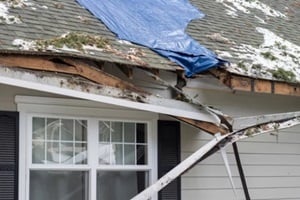
When a storm rolls through the Fox Valley, the damage to your roof is only half the problem. The other half shows up the next morning: a contractor on your doorstep with a ladder, a story, and a contract.
This guide walks Elgin and Huntley homeowners through exactly what to do after wind or hail damage, how your deductible actually works, when a claim is worth filing at all, and the one document you should never sign on your doorstep. It is the same advice we give our own clients over the phone every storm season.
What you do in the first day protects both your home and your claim.
Here is the part that surprises most Fox Valley homeowners: many Illinois policies no longer have one flat deductible.
Over the past several years, carriers across the Chicago suburbs have moved wind and hail damage to a separate percentage deductible, typically 1% to 2% of your dwelling coverage, and sometimes higher. Standard claims might still carry a $1,000 or $2,500 deductible, but hail on the roof plays by different rules.
The math changes fast. On a home insured for $450,000:
| Deductible type | What you pay first |
|---|---|
| Flat $1,000 | $1,000 |
| Flat $2,500 | $2,500 |
| 1% wind/hail | $4,500 |
| 2% wind/hail | $9,000 |
If your roof repair estimate is $8,000 and your wind/hail deductible is 2%, filing a claim gets you nothing, and the claim itself still goes on your record. This is exactly why the call to your agent comes before the call to the roofer: we can pull your actual deductible and run this math before a claim ever gets opened.
Not sure what yours is? It is on your declarations page, or it is a five minute call to our Elgin or Huntley office.
A storm claim is usually worth filing when:
Think twice when:
Claims history follows you. Carriers share loss data, and two or three small claims in a short window can raise your premium or complicate your renewal by more than the claim ever paid. A good agent's job is to tell you honestly which side of that line you are on. Learn more about homeowners insurance coverage in Elgin and Huntley.
After every major Fox Valley storm, crews canvass neighborhoods in Elgin, Huntley, Algonquin, and the surrounding towns. Some are legitimate local roofers. Some are storm chasers who follow hail maps across state lines.
The document they want signed is often an assignment of benefits (AOB) or a contingency agreement. Signing one can hand the contractor the right to negotiate with your insurance company, receive claim payments, and in some cases file suit, all in your name and without your involvement.
Once signed, you have lost control of your own claim. If the contractor inflates the scope, stalls the work, or disappears after the check clears, you are the one still living under that roof.
Illinois law gives homeowners specific protections here, including cancellation rights when a claim is denied. The Illinois Attorney General has published consumer alerts on storm-chasing contractors and home repair fraud. But the cleaner path is simple: never sign anything the same day it is handed to you.
Before hiring any storm repair contractor, ask for:
If the numbers say file, here is the typical path:
Your agent should stay in the loop the whole way. That is the difference between having a policy and having representation. Read more about how an independent agency works for you.
Yes, standard homeowners policies cover wind and hail damage, but most Illinois policies apply a separate wind/hail deductible, often 1% to 2% of dwelling coverage, and some exclude cosmetic-only damage. Check your declarations page or ask your agent to confirm what applies to your roof.
Most policies require "prompt" notice, and policies commonly set a deadline of one to two years for filing suit on a claim. Practically, file as soon as you know the damage exceeds your deductible. Waiting months makes it harder to tie the damage to the storm.
Get your agent's read first, then an estimate if the numbers are close. What you should not do is sign a contract or an assignment of benefits before your claim is even filed.
A single large weather claim usually affects your rate less than multiple small claims. Weather claims are treated differently than, say, liability claims, but claim frequency matters. This is exactly the deductible math conversation to have with your agent before filing.
Ask for the denial or estimate in writing, then call your agent. Independent agents can push back with documentation, request re-inspection, or escalate with the carrier. You also have the right to hire a licensed public adjuster, though most disputes resolve well before that step.
Storm damage is stressful, but the playbook is simple: document everything, protect the property, know your deductible before you file, hire local and licensed, and never sign on the doorstep.
Not sure what your wind/hail deductible is? That is a five minute phone call. Pro Insurance Group is an independent agency with offices in Elgin and Huntley, and we have walked hundreds of Fox Valley families through storm claims. Call us before the next storm, or before you sign anything after the last one.
1 min read
Illinois sits in the path of the jet stream and several major air currents, which is part of why Chicago earned the nickname the Windy City. For...
1 min read
Landlord insurance exists because rental property generates claims that owner-occupied homes rarely see: tenants, turnover, vacancy periods, and...
1 min read
Quick Answer: As a landlord you need property coverage for the building, liability coverage in case a tenant or visitor is injured, and loss-of-rent...