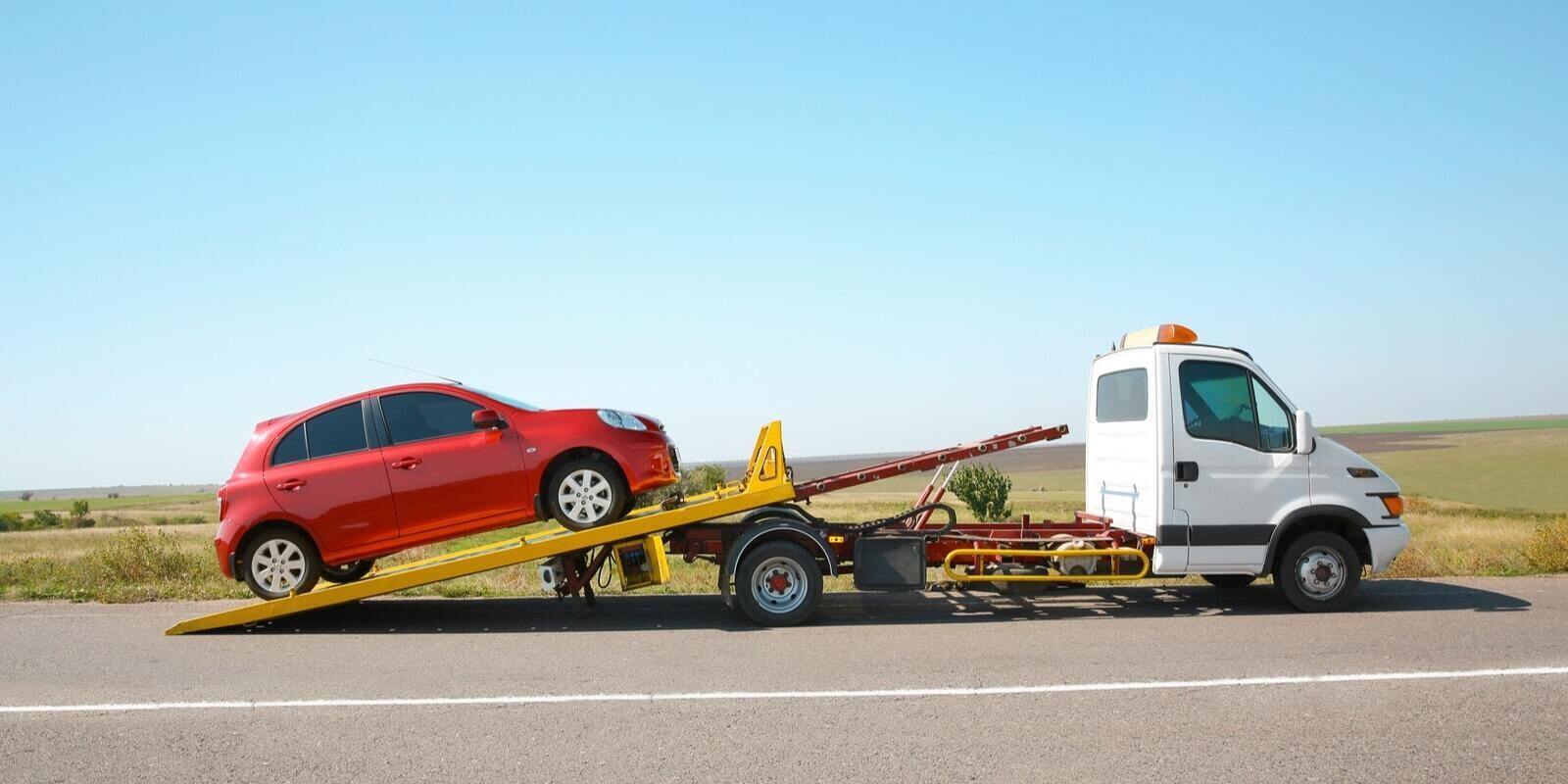
12 min read

Who Needs Commercial Towing Insurance?

Who Needs Commercial Towing Insurance?

Who Needs Commercial Towing Insurance? 12 Business Types in 2026

Quick Answer: Any business that physically tows, transports, or stores customer vehicles for compensation needs commercial towing insurance. This includes 12 distinct business types: light-duty roadside towing, medium-duty and heavy-duty recovery, motor club contractors, police rotation operators, repossession operators, long-haul transport, auto auction haulers, auto body shops with tow trucks, salvage yards, roadside-only service providers, private property impound operators, and heavy equipment movers. Each operation type has different exposures, different coverage stacks, and different carrier appetite. Annual premiums range from $3,600 (roadside-only) to $25,000+ (heavy-duty long-haul) per truck.

Pro Insurance Group writes commercial towing insurance for all 12 business types across 40+ states through Progressive Commercial, Berkshire Hathaway Homestate (BHHC), National Indemnity (NICO) via RPS, Arrowhead, KBK Insurance, and specialty MGA markets. Call 833-776-4671 or request a tow truck insurance quote online.

"Who needs commercial towing insurance" is a broader question than most business owners realize. The answer extends well beyond dedicated tow truck companies. Many businesses tow vehicles as a secondary activity, run tow trucks for customer accommodation, or operate at the edges of the towing classification without realizing they need specialty coverage. Standard commercial auto insurance does not respond to the unique exposures of towing, including customer vehicles in transit and customer vehicles stored on your premises.

This guide breaks down all 12 business types that need commercial towing insurance, the specific exposures each faces, and the coverages each one typically requires. For a complete overview of what towing insurance covers and how it works, see our 2026 Towing Insurance 101 Guide.

What "Needing Towing Insurance" Actually Means

"Needing" towing insurance breaks into three distinct categories, and most businesses are subject to at least one:

Legal requirement. Federal FMCSA regulations require interstate for-hire tow operators to carry $750,000 minimum financial responsibility with an MCS-90 endorsement. State laws require state-minimum commercial auto liability on every tow truck registered for business use. Workers compensation is required by state law for any tow business with employees.

Contractual requirement. Motor clubs (AAA, AGERO, Allstate Roadside), municipal police rotation programs, dealer relationships, and most insurance-required tow contracts require $1M combined single limit, specific garagekeepers coverage, and additional insured endorsements. These contractual requirements typically exceed legal minimums substantially.

Practical requirement. Standard commercial auto insurance does not cover the customer's vehicle on your hook (requires on-hook coverage) or stored on your lot (requires garagekeepers legal liability). Without these specialty coverages, your business is personally exposed for every customer vehicle damaged or stolen. A single uncovered loss can exceed the annual premium of the entire policy.

The legal and contractual questions are usually clear. The practical question is the one most operators get wrong, because the exposure is invisible until something happens.

12 Business Types That Need Commercial Towing Insurance

1. Light-Duty Roadside and Consumer Towing Operators

What this business looks like. Single-truck or small-fleet operators running passenger cars, light pickups, and small SUVs within a local radius (typically 0-50 miles). Most work comes from motor club contracts, retail customer calls, accident response, and dealer overflow.

Specific exposures. High call volume drives accident frequency. Customer vehicles in your care are often financed or insured, which means claims activity is routine. Roadside operation in traffic creates elevated bodily injury risk. Most light-duty operators store at least some vehicles overnight pending customer pickup.

Required coverages. $1M commercial auto liability, physical damage on the tow truck, on-hook towing coverage at $75K-$150K, garagekeepers legal liability, and workers compensation if employees are on payroll.

Typical 2026 premium: $5,400 to $8,400 per truck annually. Light-duty local is the most competitive band in the market, with broad carrier appetite from Progressive Commercial, BHHC, and specialty markets.

2. Medium-Duty and Heavy-Duty Recovery Operators

What this business looks like. Operators running Class 4 through Class 8 tow trucks, rotators, heavy wreckers, and recovery-equipped vehicles. Work includes recovery of commercial trucks, RVs, motor coaches, and damaged equipment from accident scenes. Often runs longer radius and crosses state lines.

Specific exposures. High-value equipment (trucks frequently exceed $400,000), high-value vehicles being recovered, elevated bodily injury exposure during recovery operations on highways, and contractual indemnity to municipalities and DOTs. CDL driver requirements, MCS-90 federal compliance, and specialized rigging exposures.

Required coverages. $1M-$2M commercial auto liability (often higher for police rotation), full physical damage on the equipment, on-hook coverage at $150K-$500K, garagekeepers, general liability, commercial umbrella, and MCS-90.

Typical 2026 premium: $8,400 to $25,000+ per truck annually. Carrier appetite narrows significantly at the heavy-duty level. NICO via RPS, BHHC, and specialty MGAs are the most common markets.

3. Motor Club Contractors (AAA, AGERO, Allstate Roadside, and Similar)

What this business looks like. Operators running tows under contract with national or regional motor club networks. Most light-duty and medium-duty work flows through these networks. Volume is consistent but the contracts come with strict insurance requirements.

Specific exposures. Contractual requirements typically demand $1M CSL minimum, additional insured endorsements naming the motor club, certificates of insurance filed before any call is accepted, and specific garagekeepers limits. Motor clubs often require a separate set of certificates per state and per service area.

Required coverages. Same coverage stack as light-duty or medium-duty (depending on equipment), plus the additional insured endorsements, blanket waiver of subrogation in some cases, and the ability to issue COIs quickly. Pro Insurance Group typically turns motor club COIs same-day for active accounts.

Typical 2026 premium: Same as the underlying tow class (light-duty $5,400-$8,400; medium $8,400-$16,200). Motor club status itself does not increase premium, but the contractual requirements may push limits higher.

4. Police Rotation and Municipal Impound Operators

What this business looks like. Operators on a municipal police rotation list serving accident response, abandoned vehicle removal, and impound calls. Often combined with private property impound contracts. May include long-term vehicle storage at a secure impound lot.

Specific exposures. Hostile-driver situations during impound calls, contractual indemnity exposure to the municipality, elevated theft and vandalism risk on stored vehicles, and longer storage durations increasing garagekeepers exposure. Specialty vehicle towing (large trucks, motorcycles, RVs) often required.

Required coverages. $1M-$2M commercial auto liability minimum (many municipalities require $2M), garagekeepers at higher limits ($100K-$250K), additional insured endorsements naming the municipality, on-hook coverage scaled to vehicle mix.

Typical 2026 premium: $10,800 to $18,000 per truck annually. Pricing reflects the higher contractual limits and elevated impound exposure.

5. Repossession Operators

What this business looks like. Operators recovering vehicles on behalf of lenders, captive finance companies, and consumer finance companies. Work is typically discrete-lift equipment, after-hours, and multi-state. Repo work is its own classification, separate from standard towing.

Specific exposures. Wrongful repossession claims, hostile-debtor situations, contested repossessions, and statutory violations under state UCC and consumer protection laws. Standard tow policies typically exclude or sub-limit wrongful repossession claims, leaving a major coverage gap.

Required coverages. $1M commercial auto liability, physical damage, on-hook, garagekeepers, AND a separate wrongful repossession coverage form or repo-specific E&O policy. Some carriers will write the full program; others require a separate repo line.

Typical 2026 premium: $9,600 to $15,000 per truck annually. Carrier appetite is narrow. Specialty repo MGAs and excess and surplus markets handle most placements.

6. Long-Haul Recovery and Transport Operators

What this business looks like. Operators moving disabled vehicles, heavy equipment, or specialty cargo over interstate distances. Includes commercial truck recovery, motor coach transport, RV transport, and specialty vehicle relocations. Operating radius typically exceeds 200 miles.

Specific exposures. Extended exposure on the road, multi-state regulatory compliance, federal FMCSA filings (MCS-90, MCS-150, USDOT authority), high-value cargo (often $100K-$500K+ vehicles or equipment), and longer operational hours that elevate fatigue-related accident risk.

Required coverages. $1M-$2M commercial auto liability, MCS-90 endorsement, on-hook at significant limits ($150K-$500K), garagekeepers, motor truck cargo coverage (separate from on-hook), and commercial umbrella.

Typical 2026 premium: $15,000 to $25,000+ per truck annually. Long-haul is the top of the market for towing operations.

7. Auto Auction Haulers

What this business looks like. Operators transporting vehicles between auction houses (Manheim, ADESA, Copart, IAA), dealers, and end customers. Work is high volume, multi-vehicle, and frequently involves vehicles with diminished or unknown values. May involve specialized haulers (multi-car carriers).

Specific exposures. Cargo value uncertainty, contractual chain-of-custody documentation requirements, multi-vehicle load risk (one incident affects multiple stated vehicles), and exposure across multiple state jurisdictions in a single trip.

Required coverages. $1M commercial auto liability, physical damage on the hauler, motor truck cargo coverage at significant limits, on-hook for individual recovery work, and contingent cargo coverage. Auction houses typically require additional insured endorsements naming them.

Typical 2026 premium: $9,000 to $20,000 per hauler annually, depending on capacity and operating radius.

8. Auto Body Shops and Repair Facilities With Tow Trucks

What this business looks like. Body shops, mechanical repair shops, and dealerships that operate their own tow truck for customer accommodation, accident response, or inventory transport. The tow truck is incidental to the primary business but creates the same exposures as a dedicated tow operation.

Specific exposures. Customer vehicles in transit AND stored at the shop for service create dual exposure (on-hook AND garagekeepers). Most body shop owners are surprised to learn standard auto and garage policies do not cover both. Also need to track which drivers are scheduled for the tow truck.

This business type has unique exposures that warrant a dedicated discussion. For a complete breakdown, see our dedicated guide: Why Auto Body Shops Should Carry Towing Insurance.

9. Salvage Yards and Auto Dismantlers

What this business looks like. Operators retrieving totaled vehicles, accident-damaged vehicles, and end-of-life cars for dismantling, parts recovery, and resale. Often includes both retail customer pickup and contracted work for insurance companies, salvage auctions, and recycling facilities.

Specific exposures. Damaged vehicles increase on-hook exposure during transport (already-damaged vehicles can be hard to assess at pickup). Large storage lots with many vehicles create elevated garagekeepers exposure. Pollution liability from leaking fluids, fuel, batteries, and refrigerants is also a real exposure most operators under-insure.

Required coverages. Commercial auto liability, physical damage, on-hook, garagekeepers (often at higher limits due to lot capacity), general liability, and pollution liability for fluid and contamination exposure.

Typical 2026 premium: $8,000 to $18,000 per truck annually, plus the pollution and property components.

10. Roadside-Only Service Providers (No Towing)

What this business looks like. Operators running lockouts, jumpstarts, fuel delivery, battery replacement, and tire changes on the roadside. The truck does not physically tow vehicles. Often contracted to motor clubs (AAA, AGERO) for non-tow calls.

Specific exposures. Roadside operation in traffic creates the highest bodily injury exposure of any vehicle service business. Customer vehicle damage during jumpstarts, tire changes, or lockouts. Equipment liability for fuel handling and battery replacement.

Even though no physical towing occurs, this category still needs commercial auto insurance. Coverage stacks differ enough that this category warrants dedicated discussion. For a complete breakdown, see our dedicated guide: Why Emergency Roadside Service Providers Need Towing Insurance.

11. Private Property Impound Operators

What this business looks like. Operators with contracts for unauthorized vehicle removal from apartment complexes, retail parking lots, HOA properties, and private commercial parking. Often combined with police rotation work.

Specific exposures. Hostile-vehicle-owner situations (vehicles are being removed against the owner's will), state-specific tow regulation compliance, additional insured requirements from property owners, and high storage volume on the impound lot. Some states have strict private impound notice and release requirements that create legal exposure for non-compliance.

Required coverages. $1M commercial auto liability, garagekeepers at impound-appropriate limits, on-hook, additional insured endorsements naming property owners, and often a wrongful-tow or wrongful-impound endorsement.

Typical 2026 premium: $9,000 to $16,000 per truck annually, with storage capacity driving the upper end.

12. Heavy Equipment and Machinery Movers

What this business looks like. Operators using specialized towing equipment (heavy wreckers, lowboys, oversized transport equipment) to move construction equipment, agricultural equipment, industrial machinery, and disabled commercial trucks. Often crosses into trucking territory.

Specific exposures. Extreme cargo values (single loads can exceed $500K-$1M), oversize load permit requirements, route-specific compliance, contractor indemnity exposure to job sites and rental fleets, and specialty rigging liability.

Required coverages. $1M-$2M commercial auto liability, full physical damage on equipment, on-hook at significant limits, motor truck cargo coverage, contingent cargo, and commercial umbrella often required at $5M+ for larger machinery work.

Typical 2026 premium: $14,000 to $30,000+ per unit annually, scaling with equipment value and operating radius.

How to Know If Your Business Needs Towing Insurance

If your operation does not clearly fit one of the 12 categories above, a simple decision framework helps clarify whether you need commercial towing coverage:

1. Do you tow customer vehicles for compensation? If yes, you need commercial towing insurance. Standard commercial auto does not cover the vehicle you are towing. This is the most common gap and the most common reason businesses discover they are uninsured at the worst possible moment.

2. Do you store customer vehicles on your property for any period? If yes, you need garagekeepers legal liability. Even overnight storage, even a single vehicle, triggers this exposure. A fire, theft, or weather event on your lot leaves you personally responsible for every customer vehicle damaged without GKLL.

3. Do you operate a tow truck for any business purpose, even incidentally? If yes, you need commercial auto insurance on the truck and likely on-hook coverage. Personal auto policies and standard commercial auto policies typically do not respond to towing operations.

4. Do you have contracts with motor clubs, municipalities, dealers, or insurance companies? If yes, the contract itself will specify required coverage. Failing to maintain contractual coverage is a contract breach that can terminate the relationship and create direct financial exposure.

If you answered yes to any of these, you need commercial towing insurance. If you are uncertain about your specific situation, call us at 833-776-4671 for a free coverage review.

Businesses That Typically Do NOT Need Commercial Towing Insurance

A few edge cases for clarity. The following businesses generally do not need commercial towing insurance, though they may need other commercial coverage:

  • Personal owners of tow trucks not used for business. A consumer with a personal tow truck for hobby use (off-road recovery, race car transport for their own vehicles) typically does not need commercial towing insurance, though they need a properly endorsed personal auto policy.
  • Auto dealers moving only their own inventory. Dealers transporting only vehicles they own between locations typically need commercial auto and dealer's open lot coverage, but not on-hook (you cannot insure your own vehicle under on-hook).
  • Roadside-only operations that never tow vehicles. If your work is exclusively non-tow services (lockouts, jumpstarts, fuel delivery only) and never includes any physical towing, you may not need on-hook coverage. You still need commercial auto and general liability. See our dedicated roadside guide.
  • One-time emergency tows by non-tow businesses. A general contractor using a winch to recover a stuck vehicle on a job site is not running a towing operation. Standard commercial auto and general liability typically respond.

The line between "needs towing insurance" and "does not" is sometimes thin. When in doubt, a 10-minute review with a specialty broker resolves the question.

How to Start the Quoting Process

Quoting commercial towing insurance is straightforward once you have the right information ready. To get an accurate quote from Pro Insurance Group, gather the following:

  • Current declarations page (if you have an existing policy)
  • Schedule of trucks with VINs, stated values, model years, and class (light, medium, heavy)
  • Driver list with dates of birth, license numbers, and years of tow experience
  • Claims history for the last 5 years (carrier-issued loss runs are best)
  • Description of operations (which of the 12 categories above applies)
  • Operating radius (local 0-50, intermediate 50-200, or long-haul 200+)
  • Garaging address(es) for each tow truck
  • Annual gross revenue estimate for the towing operation
  • Federal DOT/MC numbers (interstate operators)
  • State licensing details (where applicable)

Most quotes return within 24 to 48 hours of submission. Light-duty operations with clean MVRs and 2+ years of experience often bind same-day or next-business-day. Heavy-duty, repossession, and adverse-loss-history accounts may take 5 to 10 business days due to manual underwriter review.

Free commercial towing insurance review across our appointed carriers.

Request a Quote Online

Or call 833-776-4671

Frequently Asked Questions

Does my business need towing insurance if I only tow occasionally?

Yes. Any business that tows customer vehicles for compensation, even occasionally, needs commercial towing insurance. Frequency does not determine the need. The exposure exists every time you hook a customer vehicle, whether that is once a year or fifty times a day. Standard commercial auto insurance does not respond to towing claims regardless of frequency.

I am a body shop with one tow truck for customer accommodation. Do I need full towing insurance?

Yes. Body shops running tow trucks face the same exposures as dedicated tow operators, often with additional garagekeepers exposure from storing vehicles for repair. Your existing garage liability policy does NOT cover on-hook exposure. See our dedicated guide for body shops with tow trucks.

Does motor club work require different insurance than independent towing?

The base coverage stack is the same, but motor clubs impose additional requirements: typically $1M CSL minimum, additional insured endorsements naming the motor club, specific garagekeepers limits, and the ability to issue COIs quickly. These contractual requirements often exceed state legal minimums. Your broker should be able to issue motor-club-compliant COIs same-day.

Does roadside-only service need towing insurance?

Roadside-only operations that never physically tow vehicles do not technically need on-hook coverage. They still need commercial auto liability, general liability, and workers compensation if employees are on payroll. The moment you add even occasional towing, the coverage stack shifts. Many "roadside-only" operators occasionally pull a stuck vehicle out of a ditch or short-tow a disabled car, which triggers the on-hook requirement.

Is repossession towing the same as commercial towing?

No. Repossession is its own insurance class. Standard commercial tow policies typically exclude or sub-limit wrongful repossession claims, which is the primary exposure in repo work. Repo operators need a separate wrongful repossession coverage form or a repo-specific E&O policy in addition to standard tow coverage. Carrier appetite for repo is narrow, and most placements run through specialty MGAs.

How much towing insurance does a single-truck operation typically need?

A single light-duty truck running local motor club work typically carries: $1M commercial auto liability, physical damage matching truck value, $75,000-$150,000 on-hook, $75,000 garagekeepers, general liability, and workers compensation if employees are on payroll. Total annual premium typically runs $5,400-$8,400 for clean operations with 2+ years of experience. For complete pricing, see our 2026 Tow Truck Insurance Cost Guide.

Can I get commercial towing insurance as a new business with no operating history?

Yes. New ventures typically pay 30-60% more in the first year because underwriters have no operating history or loss data. Premium normalizes by year 2 and stabilizes by year 3-5 with a clean record. Key first-year actions that materially reduce year-two pricing: clean MVRs on every driver, written safety program, in-cab cameras or telematics, $1M primary liability from day one, and properly limited on-hook coverage. Pro Insurance Group also helps with DOT authority, MCS-150 filings, and state operating authority for new ventures.

Get a Commercial Towing Insurance Quote

Whether you fit one of the 12 categories above or you are uncertain about your specific situation, Pro Insurance Group reviews commercial towing exposures at no cost. We quote across our appointed carriers and specialty MGAs to identify the right program for your operation type, not a generic policy.

Talk to a Commercial Towing Insurance Specialist

Free portfolio review. No obligation. We will identify which of the 12 categories matches your operation, confirm whether you need towing insurance, and quote alternatives across the specialty market.

Request a Quote Online

Or call 833-776-4671

2521 Technology Dr, Ste 201, Elgin, IL 60124 | info@proinsgrp.com

Related Commercial Towing Insurance Resources

About the Author: This guide was written by Neal Fusco, Vice President of Commercial Lines at Pro Insurance Group. Neal brings 25+ years of experience across both the carrier and agency sides of the insurance industry, with deep specialization in commercial towing, trucking, garage keepers, habitational, and complex risk placement. He has placed coverage for light-duty roadside operations, heavy-duty recovery, repossession, police rotation, motor club tow operators, auto auction haulers, and specialty heavy equipment movers across 40+ states.

This page is for general informational purposes and does not constitute an insurance quote or binding offer. Actual premiums vary based on operation, state, driver record, loss history, limits, and carrier appetite. Contact Pro Insurance Group for a formal quote.

Why Emergency Roadside Service Providers Need Towing Insurance

1 min read

Why Emergency Roadside Service Providers Need Towing Insurance

Why Emergency Roadside Service Providers Need Commercial Towing Insurance Quick Answer: Emergency roadside service providers (lockouts, jumpstarts,...
Read More
Why Auto Body Shops Should Acquire Towing Insurance

1 min read

Why Auto Body Shops Should Acquire Towing Insurance

Why Auto Body Shops Need Towing Insurance in 2026 Quick Answer: Auto body shops that operate a tow truck for customer accommodation, accident...

Read More