What Is Garage Keepers Insurance?
 Neal Fusco : May 19, 2021, 12:00:00 AM
Complete 2026 guide to garage keepers insurance: what it covers, who needs it, the three coverage forms, and typical costs. By Neal Fusco.
10 min read
 Neal Fusco
:
Updated on October 4, 2026
Neal Fusco
:
Updated on October 4, 2026
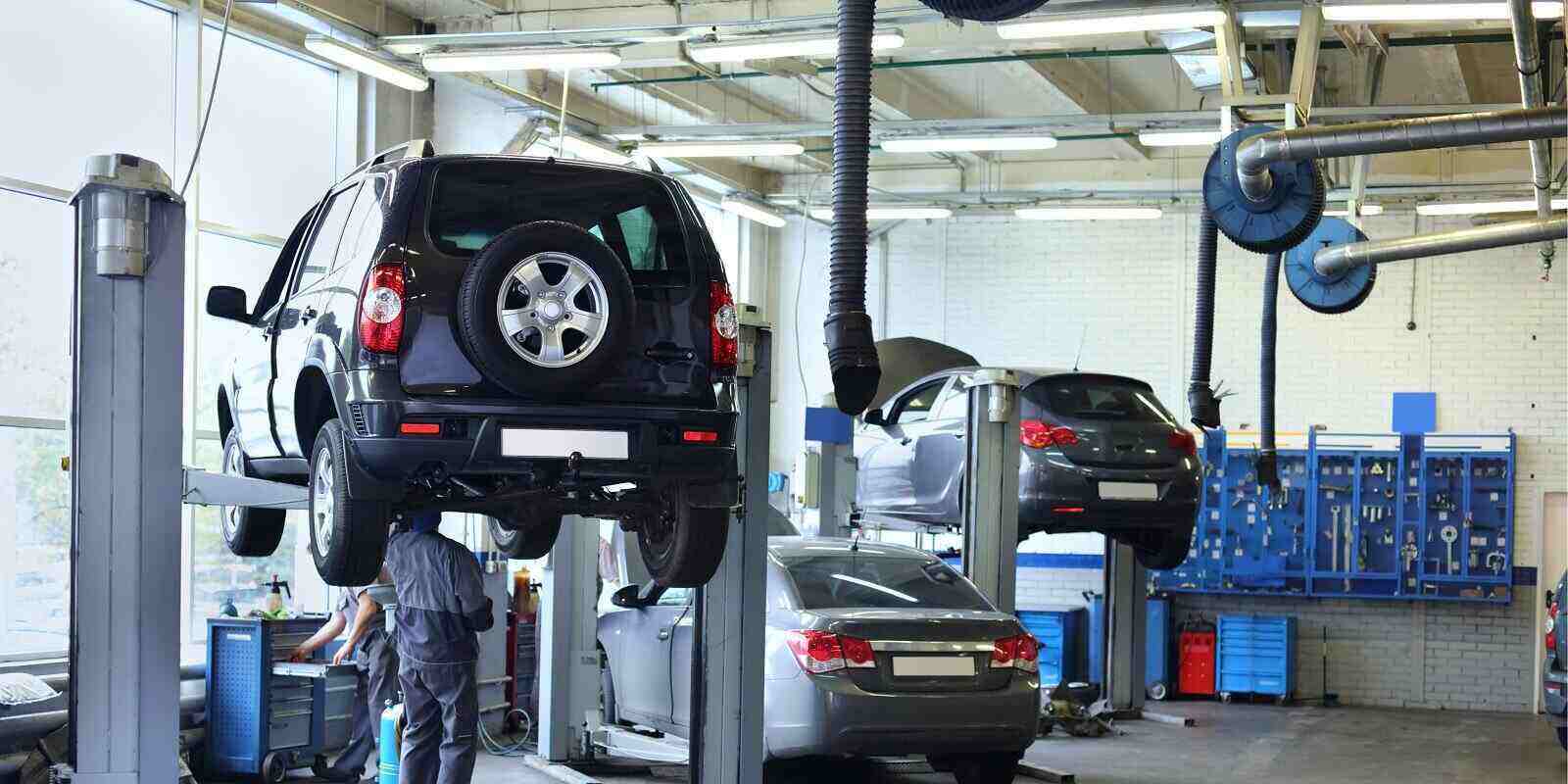
![Why Do I Need Garage Keepers Insurance? Real Scenarios [2026]](https://www.proinsgrp.com/hs-fs/hubfs/Imported_Blog_Media/mechanic-working-in-auto-repair-shop.jpg?width=1600&height=800&name=mechanic-working-in-auto-repair-shop.jpg)
Quick Answer: If your business takes custody of customer vehicles for any reason and any duration, you need garage keepers insurance. Your commercial property policy covers your building, not your customers' cars. Your general liability covers slip-and-fall and operations claims, not vehicle damage. Your commercial auto covers your business vehicles, not theirs. None of those policies respond when a customer vehicle on your lot is damaged by fire, theft, vandalism, weather, or collision. A single uncovered multi-vehicle event can exceed the entire annual premium of your insurance program. Garage keepers fills the gap. Typical 2026 premiums run $500 to $5,000+ per year for protection that often exceeds your peak overnight exposure.
Pro Insurance Group writes garage keepers insurance for auto body shops, repair facilities, dealerships, towing operations, parking operators, and specialty automotive businesses across 40+ states. Call 833-776-4671 or request a garage keepers insurance quote online.
Most automotive business owners think they are fully insured because they carry a "business policy." They are not. The single largest coverage gap in commercial automotive insurance is the exposure created by customer vehicles in your custody, and standard business policies do not respond to it. This guide walks through the most expensive misconception in the industry, five real claim scenarios where the gap creates uncovered losses with specific dollar amounts, and the decision framework that determines whether you need garage keepers coverage.
For the foundational explanation of what garage keepers is and how the three coverage forms work, see our complete guide to garage keepers insurance. For the technical breakdown of perils, exclusions, sub-limits, and endorsements, see what garage keepers insurance covers.
Most automotive business owners think their commercial property policy or general liability policy will respond when a customer vehicle is damaged on their premises. Both assumptions are wrong, and the misconception is expensive.
Commercial property excludes customer vehicles. Your commercial property policy covers your building, your equipment, your inventory, and your business contents. Customer vehicles are not "your property." They are excluded by the policy's "property of others" provisions and by separate vehicle exclusions in standard ISO commercial property forms. The most expensive customer vehicle on your lot is not covered by the most expensive property policy you can buy.
General liability excludes vehicles in your care. General liability covers premises, operations, and completed work: slip-and-fall claims, customer injury during a test drive, product liability from a faulty repair. It does NOT cover physical damage to a vehicle in your custody, care, and control. The "care, custody, and control" exclusion is standard in every CGL policy. The vehicle exclusion is also standard.
Commercial auto covers YOUR vehicles, not theirs. Your commercial auto policy responds to liability and physical damage on YOUR business vehicles. It does not extend to customer vehicles in your care.
The customer's own policy may not respond. Customers often assume their own auto policy will respond to damage at your shop. Sometimes it does, sometimes it does not, and even when it does, the carrier may subrogate against your business to recoup the loss. You are the source of recovery either way.
Garage keepers insurance is the only coverage that fills this gap. Without it, every customer vehicle on your premises is your personal financial exposure.
Real situations that occur regularly in automotive businesses. Each scenario shows what happens with proper garage keepers coverage and what happens without it.
A mid-size body shop has 14 customer vehicles on the lot awaiting or in repair. An electrical fault in the paint booth ignites a fire that spreads through the building overnight. The building is partially destroyed. Six customer vehicles are total losses; eight have significant smoke and heat damage. Average vehicle value: $28,000. Total customer vehicle exposure: approximately $235,000.
With garage keepers (direct primary, $300,000 limit, broad-form): The policy responds to the customer vehicle losses up to the policy limit. The shop's deductible (per occurrence, $2,500) applies once. The shop's commercial property policy responds separately for the building. Net out-of-pocket: $2,500.
Without garage keepers: The shop is personally responsible for the $235,000 in customer vehicle losses. Customer auto policies may pay some portion of the loss, but the carriers typically subrogate against the shop. The shop's commercial property policy excludes customer vehicles. Net out-of-pocket: $235,000+ (plus legal defense costs from inevitable customer lawsuits).
A towing company maintains an impound lot with 22 customer vehicles in storage. A severe hail storm damages every vehicle on the lot. Average per-vehicle damage: $4,800. Total customer vehicle exposure: approximately $105,000.
With garage keepers (broad-form, $150,000 limit, per-occurrence deductible of $5,000): The policy responds. The single per-occurrence deductible applies once. Net out-of-pocket: $5,000.
With garage keepers (named-peril, $150,000 limit, but $2,500 PER-VEHICLE deductible): Each of the 22 vehicles triggers its own deductible. 22 × $2,500 = $55,000 in deductibles before the policy pays anything. Net out-of-pocket: $55,000 just in deductibles. This is why per-occurrence deductibles matter for multi-vehicle storage operations.
Without garage keepers: The tow operator is personally responsible for $105,000 in customer vehicle losses. Some customer comprehensive policies may respond; others will not, especially for higher-deductible customers or vehicles without comprehensive coverage. The tow operator absorbs the gap. Net out-of-pocket: typically $40,000-$80,000+ after customer policies contribute.
Thieves break into a mechanical repair shop's lot overnight and cut catalytic converters from 5 customer vehicles. Replacement cost per converter: $1,800-$2,800. Total customer vehicle exposure: approximately $12,000, plus customer inconvenience and rental car costs.
With garage keepers including parts theft sub-limit of $3,000 per vehicle: The policy responds up to the sub-limit per vehicle. With a $500 per-vehicle deductible, the shop pays $2,500 in total deductibles; the policy pays the remainder. Net out-of-pocket: $2,500.
Without garage keepers (or with parts theft excluded): The shop is personally responsible for $12,000 plus rental car costs. The shop may also lose customer relationships, particularly if the shop's lack of security is seen as contributing to the loss.
A service technician moving a customer vehicle from the lot to a service bay backs into a parked customer vehicle. The struck vehicle sustains $6,200 in damage. The vehicle being driven sustains $2,800 in damage. Total customer vehicle exposure: approximately $9,000.
With garage keepers (any coverage form): Both vehicles are covered. Per-vehicle deductibles apply, but the policy pays the balance. This is the most common type of garage keepers claim by frequency and the scenario where even legal liability coverage typically responds (employee negligence is the trigger).
Without garage keepers: The shop pays $9,000 plus possible diminished-value claims. The shop's general liability does not respond (vehicle-in-care exclusion). The shop's commercial auto may respond for the vehicle being driven, but only if the policy specifically extends to non-owned vehicles in the insured's care, which is uncommon. Net out-of-pocket: typically the full $9,000.
A late-model customer SUV is stolen overnight from a body shop's fenced lot. The vehicle is not recovered. Actual cash value: $42,000.
With direct primary garage keepers ($75,000 per-vehicle limit, $1,000 deductible): The policy responds for the full vehicle value regardless of fault. The customer receives a check or the shop pays out and is reimbursed. Net out-of-pocket: $1,000.
With legal liability garage keepers (same limit): The policy may not respond because the shop was not legally negligent (the lot was reasonably secured, surveillance was in place, theft was a third-party act). The customer's comprehensive policy may respond, subject to their deductible; if it does not, the shop is exposed. Outcome depends on the specific facts and applicable state law.
Without garage keepers: The shop is in the recovery line behind the customer's own carrier. Even if the customer's policy responds, the carrier typically subrogates against the shop. Net out-of-pocket: up to $42,000 plus legal defense costs.
A summary of how each of your existing commercial policies responds (or does not) to a customer vehicle loss on your premises:
| Existing Policy | Response to Customer Vehicle Damage |
|---|---|
| Commercial Property | Does NOT respond. Customer vehicles excluded as "property of others." Policy covers building and contents only. |
| General Liability | Does NOT respond. Care/custody/control exclusion and vehicle exclusion both apply to property damage to customer vehicles. |
| Commercial Auto | Does NOT respond. Covers YOUR business vehicles, not customer vehicles in your care. |
| Business Owners Policy (BOP) | Does NOT respond in most cases. Standard BOP forms exclude customer vehicles, and garage class businesses typically cannot use BOP forms at all. |
| Workers Compensation | Does NOT respond. Covers employee injury, not property damage. |
| Commercial Umbrella | Does NOT respond as primary. Umbrella excess sits ABOVE underlying coverage. If you have no underlying garage keepers, there is nothing for the umbrella to sit on. |
| Garage Liability | Does NOT respond to physical damage on customer vehicles. Covers premises, operations, and completed work. Often written alongside garage keepers in a single policy, but garage keepers is the separate coverage that responds to vehicle damage. |
| Garage Keepers | DOES respond. The only coverage form designed to pay for physical damage to customer vehicles in your custody, care, and control. |
There is no substitute. Garage keepers is the one coverage that responds to this exposure, and no amount of property, GL, or commercial auto can fill the gap if garage keepers is missing.
A direct framework. Answer these seven questions:
If you answered yes to any of questions 1 through 6, you need garage keepers insurance. If you answered yes to question 7, the next step is a coverage audit to confirm your existing coverage matches your actual exposure.
Garage keepers insurance is one of the most cost-effective commercial coverages in the automotive industry. A direct comparison:
| Operation Type | Typical Annual Premium | Typical Single-Event Exposure Without Coverage |
|---|---|---|
| Small repair shop (3-8 vehicles) | $500 - $1,200 | $50,000 - $150,000 |
| Mid-size body shop (10-20 vehicles) | $1,200 - $3,000 | $150,000 - $500,000 |
| Large body shop or repair facility (25-50+ vehicles) | $3,000 - $6,000 | $500,000 - $1.5M+ |
| Towing impound lot | $1,500 - $5,000 | $200,000 - $750,000 |
| Dealer service department | $2,000 - $8,000 | $500,000 - $2M+ |
A small repair shop pays $1,000 a year for coverage against a $150,000 worst-case event. A mid-size body shop pays $2,000 a year against a $500,000 worst-case. The premium-to-exposure ratio is consistently in the range of 100:1 to 250:1. No other commercial coverage delivers this kind of risk transfer math.
Free coverage audit. We confirm whether you have garage keepers in your program and quote alternatives.
Or call 833-776-4671
Not reliably. Customer auto policies may respond to damage at your shop, subject to their deductible and policy wording, but the customer can also pursue your business directly, especially when the cause involves your employees or operations. Even when the customer's policy responds, the carrier often subrogates against your business to recoup the loss. You are typically the source of recovery either way.
Yes. The exposure begins the moment you take possession of a customer vehicle, regardless of how few vehicles you handle. A single uncovered loss can exceed years of saved premium. Single-truck and single-bay operations can typically purchase appropriate garage keepers coverage for $500-$1,200 per year.
Almost certainly not for vehicles. Standard commercial property forms exclude motor vehicles via specific exclusionary language, and general liability policies exclude property in your care, custody, and control. Read the actual policy wording. Most business owners who believe their policy covers customer vehicles are reading either an extension that excludes vehicles or a sub-limit that is too low to be meaningful.
Garage liability and garage keepers are two different coverages, even when written together on a single garage policy. Garage liability covers premises, operations, and completed work. Garage keepers covers physical damage to customer vehicles in your care. Carrying one does not mean you have the other. Verify both are on your declarations page.
Garage keepers pays for the physical damage to the customer vehicle. It does not provide unlimited defense or pay for consequential damages, diminished value claims, or punitive damages (which typically fall under garage liability or commercial umbrella). The combination of garage keepers + garage liability + a commercial umbrella provides the layered protection most automotive businesses need.
Generally yes. Garage keepers premiums are typically deductible as ordinary and necessary business expenses for automotive operations. Specific deductibility depends on your business structure and tax situation, and you should confirm with your accountant. The deductibility further reduces the effective net cost of coverage.
In most cases, garage keepers can be added mid-policy by endorsement. Some carriers require renewal-time changes; specialty markets are typically more flexible. Pro Insurance Group can usually bind garage keepers coverage within 1-3 business days once the operation has been quoted. If you have an active exposure today without coverage, do not wait for renewal.
The conversation about garage keepers usually starts with one of two situations: a business owner who has had a near-miss and wants to fix the gap before something worse happens, or a business owner who is about to sign a contract that requires the coverage. Either way, the next step is the same: a free coverage audit to confirm what you have today and quote the right structure across our appointed carriers.
Free policy audit. We confirm whether you have garage keepers coverage, size the limit to your peak exposure, recommend the right form, and quote alternatives across our appointed carriers.
Or call 833-776-4671
2521 Technology Dr, Ste 201, Elgin, IL 60124 | info@proinsgrp.com
About the Author: This guide was written by Neal Fusco, Vice President of Commercial Lines at Pro Insurance Group. Neal brings 25+ years of experience across both the carrier and agency sides of the insurance industry, with deep specialization in garage keepers, commercial towing, auto body shop programs, dealer open lot coverage, and complex commercial risk placement. He has reviewed hundreds of automotive operation insurance programs and identified the coverage gaps that create six-figure uncovered exposures across body shops, mechanical repair facilities, dealerships, towing operations, parking operators, and specialty automotive businesses in 40+ states.
This page is for general informational purposes and does not constitute an insurance quote or binding offer. Claim scenarios are illustrative examples based on common loss patterns and do not represent specific claims or guarantees of coverage. Actual coverage depends on policy form, limits, exclusions, endorsements, state law, and carrier appetite. Contact Pro Insurance Group for a formal coverage review and quote.
 Neal Fusco : May 19, 2021, 12:00:00 AM
Complete 2026 guide to garage keepers insurance: what it covers, who needs it, the three coverage forms, and typical costs. By Neal Fusco.
 Neal Fusco : May 31, 2021, 12:00:00 AM
What does garage keepers insurance cover? Complete list of perils, exclusions, sub-limits, and key endorsements for 2026. By Neal Fusco.
 Neal Fusco : May 24, 2021, 12:00:00 AM
Auto body shops with tow trucks face dual exposure: on-hook AND garagekeepers. Why your garage policy isn't enough. 2026 guide by Neal Fusco.