Who Needs Commercial Towing Insurance?
 Neal Fusco : Apr 5, 2021, 12:00:00 AM
Complete guide to who needs commercial towing insurance: 12 business types, their specific risks, and the coverages each one requires. By Neal Fusco
8 min read
 Neal Fusco
:
Updated on September 2, 2026
Neal Fusco
:
Updated on September 2, 2026
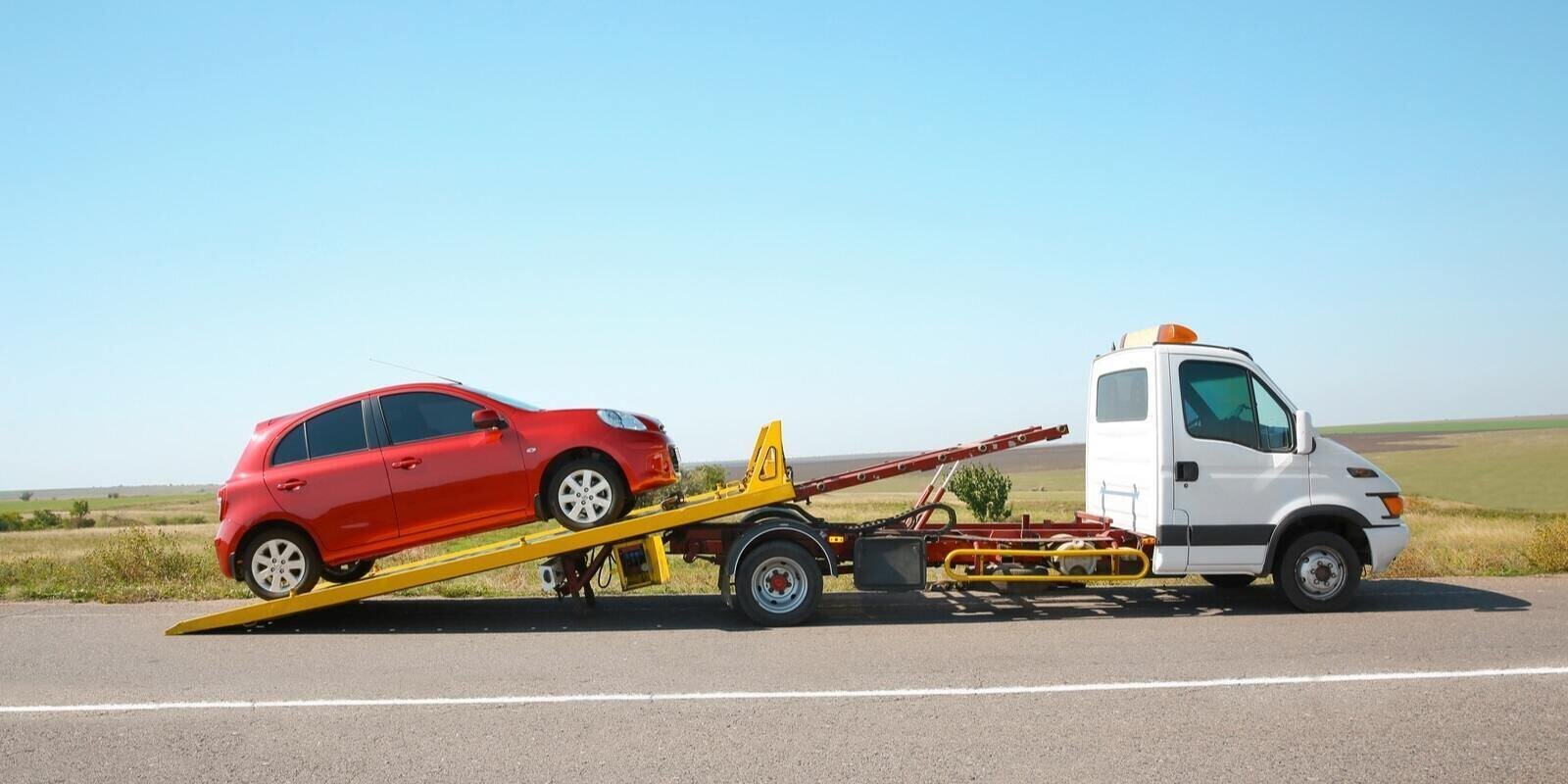
Quick Answer: Emergency roadside service providers (lockouts, jumpstarts, fuel delivery, tire changes, battery service) need commercial towing insurance even when no physical towing occurs. Standard commercial auto insurance does not cover customer vehicle damage during service operations, roadside bodily injury exposure to operators and passing motorists, or the equipment liability for fuel handling and battery work. The roadside operation itself is one of the highest bodily injury exposures in the commercial vehicle service industry. Most "roadside-only" operators also short-tow stranded vehicles occasionally, which immediately triggers on-hook coverage requirements. Typical 2026 premium for a roadside-only single-truck operation: $3,600 to $5,400 per year.
Pro Insurance Group writes commercial insurance for roadside assistance operators across 40+ states through Progressive Commercial, Berkshire Hathaway Homestate (BHHC), Arrowhead, KBK Insurance, and specialty MGA markets. Call 833-776-4671 or request a roadside service insurance quote online.
Emergency roadside service is one of the most misunderstood operations in the commercial vehicle service industry. Operators running lockouts, jumpstarts, fuel delivery, tire changes, and battery service often believe they fall outside the "tow truck insurance" category because they do not physically tow vehicles. The category does exist as a distinct insurance class, but the assumption that it requires lighter or simpler coverage is wrong. Roadside operation creates exposures that demand specific coverage stacks, and the gap between "what an operator thinks they need" and "what they actually need" is where most uncovered claims happen.
This guide explains the specific exposures roadside service providers face, the coverages required to respond to them, the "roadside-only" coverage trap that catches most operators, and typical 2026 pricing. For broader context on commercial towing classifications, see our Towing Insurance 101 guide or our Who Needs Commercial Towing Insurance overview.
Emergency roadside service is a commercial vehicle service classification that includes non-tow assistance at the customer's vehicle location. The typical service mix:
Most roadside operators run contracts with motor club networks (AAA, AGERO, Allstate Roadside, Honk, Urgent.ly) for inbound call volume. Some run direct retail. The service vehicle is typically a light-duty truck, SUV, or service van rather than a tow truck, though some operators carry both classifications. Winch-out service is the gray area where roadside crosses into towing classification.
1. Bodily injury at roadside. Roadside service is one of the highest bodily injury exposures in the commercial vehicle service industry. Operators work in active traffic lanes, on highway shoulders, and at night more often than dedicated tow operators. Independent research has documented that roadside responders face significantly elevated fatality risk relative to general commercial drivers. Liability coverage at minimum state limits is not enough; $1M combined single limit is the working minimum.
2. Customer vehicle damage during service. A slim jim that scratches a window seal. A jumpstart that damages an electrical control module on a modern vehicle. A tire change that drops the vehicle off the jack. A fuel delivery that splashes onto paint. Each of these is a routine roadside event that can generate a customer vehicle damage claim. Standard commercial auto liability does not respond to damage caused during service operations. On-hook coverage or a service-specific endorsement is typically required.
3. Equipment liability for fuel and battery work. Operators carrying fuel cans, jump packs, and replacement batteries face equipment-specific exposure. A faulty jump pack can cause electrical damage. A leaking fuel can creates pollution exposure. A defective replacement battery installation can create a fire claim. General liability typically responds to these events but only if properly endorsed for the products and services involved.
4. Third-party motorist exposure. A vehicle being serviced on the shoulder is often partially blocking traffic. Other motorists swerving to avoid the scene create chain-reaction exposure. The roadside operator can be brought into claims by motorists who were injured nearby, even when the operator did not directly cause the incident. Premises and operations liability under general liability responds to these claims.
5. Driver and employee injury exposure. Roadside operators face elevated risk to their own personnel. A driver struck while changing a tire on the shoulder. A technician injured by a passing motorist while pumping fuel. A back injury lifting a customer's spare. Workers compensation is required by state law for any operation with employees, and the rate class for roadside service typically prices in the elevated exposure.
A complete roadside service insurance program typically includes the following coverage lines:
| Coverage | Why It Matters for Roadside |
|---|---|
| Commercial Auto Liability ($1M CSL) | Required by every motor club contract. State minimums are not enough. Responds to third-party bodily injury and property damage from the service vehicle itself. |
| Physical Damage | Damage to your service truck or van. Required if the vehicle is financed. Scales with stated value. |
| On-Hook Coverage | Required if you ever physically tow, winch, or short-haul a customer vehicle, even occasionally. Standard auto liability does NOT cover the customer vehicle in your care. |
| General Liability | Premises, operations, and product liability for service work. Responds to customer vehicle damage during lockouts, jumpstarts, and tire changes. |
| Workers Compensation | Required by state law for any business with employees. Rate class for roadside service prices in the elevated bodily injury exposure. |
| Commercial Inland Marine (Equipment Floater) | Covers your jump packs, fuel cans, tire equipment, and battery inventory against theft and damage. Often overlooked but typically inexpensive. |
| Commercial Umbrella | Additional limits above primary auto and GL. Often required for higher-tier motor club contracts and recommended given the elevated bodily injury exposure. |
For operations that also handle stored vehicles or operate a service yard, add garagekeepers legal liability. Most roadside-only operators do not need garagekeepers because they do not store customer vehicles, but mixed-operation businesses do.
The most common coverage gap among roadside service operators is the assumption that "roadside-only" means no on-hook coverage is needed. The trap operates in three specific scenarios:
Winch-out service. A vehicle stuck in a ditch, deep snow, mud, or off-road. The roadside operator winches the vehicle out. The moment the cable attaches to the customer vehicle, on-hook exposure begins. If the cable damages the bumper, frame, or undercarriage, the operator is responsible. A standard commercial auto policy without on-hook will not respond.
Short-tow assistance. A customer's vehicle dies in a parking lot. The operator agrees to push or short-tow it to a safer location. The instant the vehicle is in motion under the operator's control, on-hook exposure is in effect. The "we never tow" identity does not match the operational reality.
Mixed operations. Operators that primarily run roadside but occasionally accept a tow call when no other tow operator is available. The occasional tow creates the same exposure as a dedicated tow operation, and a standard roadside-only policy does not respond.
The solution is straightforward: any operator that might tow, winch, or move a customer vehicle should carry on-hook coverage regardless of how often it happens. The premium for $50,000-$75,000 of on-hook coverage is typically $400-$800 per year. Cheap insurance against a single uncovered claim. For a complete breakdown of how on-hook works, see our on-hook towing insurance guide.
Most roadside operators run inbound calls through motor club networks. Each motor club has its own insurance requirements, but the common minimum standards typically include:
These requirements are non-negotiable. Operators that cannot produce a compliant certificate of insurance cannot run calls. Pro Insurance Group issues motor-club-compliant COIs same-day for active accounts. We also handle the contractual endorsements and waivers that motor clubs require as part of their onboarding.
Roadside service insurance is one of the more affordable commercial vehicle service classifications because the equipment values are lower and the on-hook exposure is reduced. Typical 2026 premiums:
| Operation Type | Typical Annual Premium |
|---|---|
| Single-truck roadside-only (no towing) | $3,600 - $5,400 |
| Single-truck roadside + occasional short-tow / winch-out | $4,800 - $7,200 |
| Multi-truck roadside operation (3-5 trucks) | $9,000 - $18,000 |
| New venture (first year, no prior commercial history) | $5,400 - $8,400 (30-60% surcharge) |
Premium is driven by truck class and value, driver MVRs, years in business, motor club contract requirements, and the presence or absence of any towing component. For full cost detail across all tow operation types including roadside, see our 2026 Tow Truck Insurance Cost Guide.
Free roadside service insurance review across our appointed carriers.
Or call 833-776-4671
You do not technically need on-hook coverage for pure lockout and jumpstart work since no physical towing occurs. You still need commercial auto liability, general liability, and workers compensation if employees are on payroll. However, most roadside operators occasionally winch out a stuck vehicle or short-tow a disabled car, which triggers the on-hook requirement. The premium for $50K-$75K of on-hook is typically $400-$800 per year and removes the coverage gap entirely.
Most motor club networks require $1M combined single limit commercial auto liability, $1M general liability with completed operations coverage, additional insured endorsements naming the motor club, waiver of subrogation, and workers compensation if employees are on payroll. These requirements are non-negotiable. Operators that cannot produce a compliant certificate of insurance cannot accept calls.
No. Personal auto policies exclude commercial use of the vehicle. A roadside operator running calls under a personal policy has no coverage if a claim occurs during service work. Commercial auto liability is required, and many personal auto carriers will cancel the policy if they discover commercial use after the fact.
Customer vehicle damage during roadside service typically responds under general liability if the policy is properly endorsed for the products and services involved. Modern vehicles with sensitive electronics can sustain expensive damage from improper jump procedures. Lockout work using slim jims and wedges can damage window seals and trim. If you carry on-hook coverage, that policy may also respond depending on policy wording.
Yes, typically. Pure roadside-only operations with no towing component run $3,600 to $5,400 per truck per year in 2026, compared to $5,400 to $8,400 for light-duty local towing. The difference reflects the reduced on-hook exposure. Adding occasional towing or winch-out service pushes the premium into the light-duty range.
Yes. New ventures pay 30-60% more in the first year because underwriters have no operating history. Premium normalizes by year 2 with a clean record. Key first-year actions to reduce year-two pricing: clean MVRs on every driver, written safety program, in-cab cameras or dash cams (some carriers offer 5-15% credits), and $1M primary liability from day one to support motor club contracts.
Whether you run pure roadside service (no towing) or a mixed operation that includes occasional winch-out and short-tow work, Pro Insurance Group quotes the right coverage stack across our appointed carriers. We also handle motor club COIs, additional insured endorsements, and waiver requirements that the major networks impose on contracted operators.
Free portfolio review across our appointed carriers. We identify the right coverage for your specific service mix and confirm whether you have gaps in your current program.
Or call 833-776-4671
2521 Technology Dr, Ste 201, Elgin, IL 60124 | info@proinsgrp.com
About the Author: This guide was written by Neal Fusco, Vice President of Commercial Lines at Pro Insurance Group. Neal brings 25+ years of experience across both the carrier and agency sides of the insurance industry, with deep specialization in commercial towing, trucking, roadside service, garage keepers, and complex commercial risk placement. He has placed coverage for single-truck roadside operators, multi-truck service fleets, and motor-club-contracted businesses across 40+ states.
This page is for general informational purposes and does not constitute an insurance quote or binding offer. Actual premiums vary based on operation, state, driver record, loss history, limits, and carrier appetite. Contact Pro Insurance Group for a formal quote.
 Neal Fusco : Apr 5, 2021, 12:00:00 AM
Complete guide to who needs commercial towing insurance: 12 business types, their specific risks, and the coverages each one requires. By Neal Fusco
 Neal Fusco : Mar 22, 2021, 12:00:00 AM
Complete 2026 guide for towing companies: coverages, costs, top carriers, common mistakes, and how to pick the right broker. By Neal Fusco.
 Neal Fusco : May 24, 2021, 12:00:00 AM
Auto body shops with tow trucks face dual exposure: on-hook AND garagekeepers. Why your garage policy isn't enough. 2026 guide by Neal Fusco.