.png) Dave Rysavy
Dave Rysavy
1 min read
Top 5 Home Insurance Myths
.png?width=30&name=Designer%20(60).png) Dave Rysavy : Feb 1, 2021 12:00:00 AM
Dave Rysavy : Feb 1, 2021 12:00:00 AM
Most homeowners do not learn what their policy actually covers until they file a claim. By then it is too late. After reviewing thousands of home...
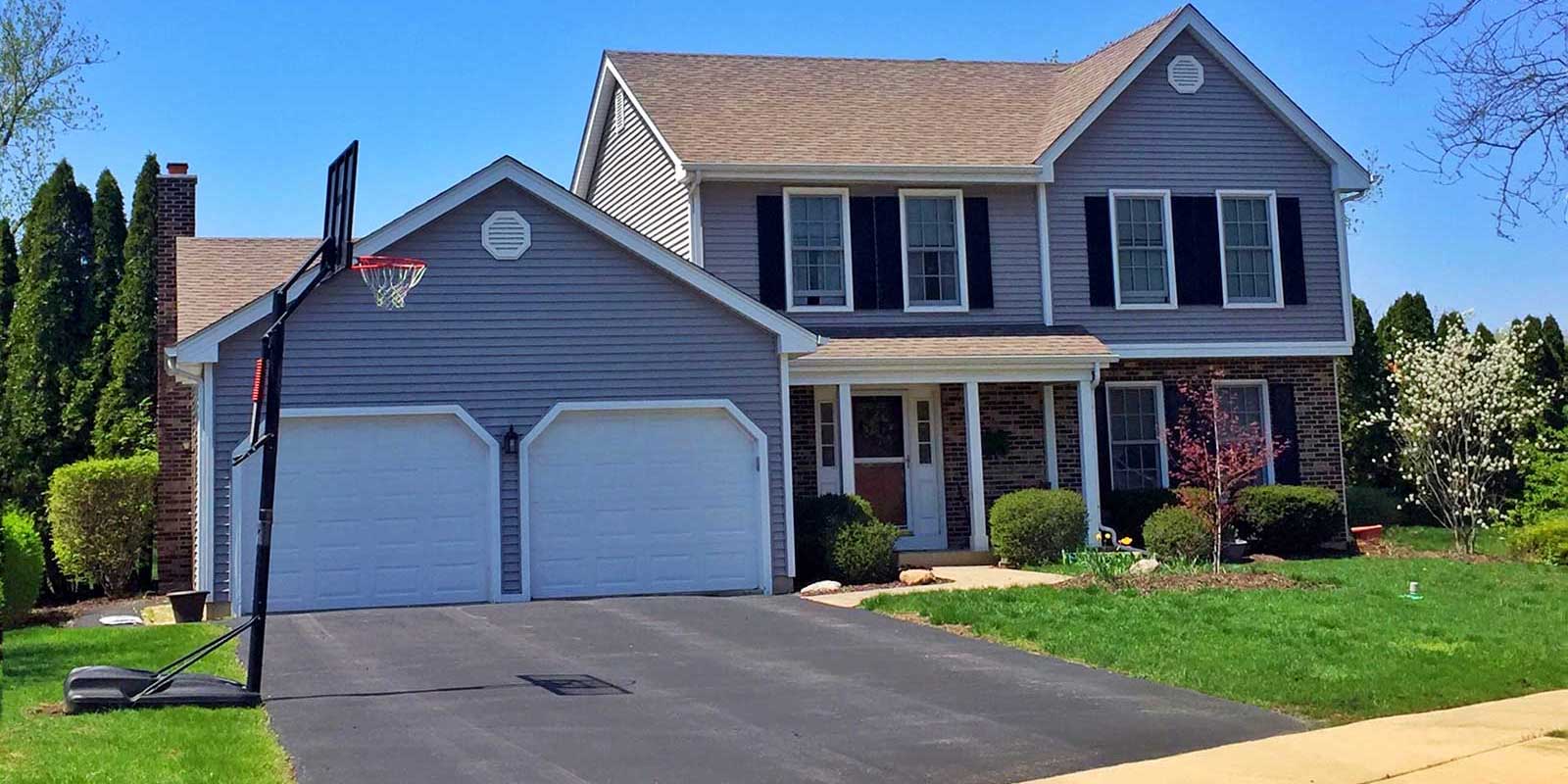
Most Illinois homeowners we talk to are paying 20 to 40 percent more for home insurance in 2026 than they were three years ago, even with no claims. Construction costs, severe weather frequency, and reinsurance costs have all moved sharply. The result is the largest sustained home insurance rate environment Illinois has seen in a generation. This guide explains what Illinois homeowners are actually paying in 2026, what drives those costs, and what you can do to lower your rate without cutting coverage.
Quick Answer: The average Illinois homeowner with around $300,000 in dwelling coverage pays between $2,150 and $2,400 per year for home insurance in 2026. Cost varies significantly by region: Chicago-area homes typically pay $2,300 to $2,800, Kane and McHenry County homes range from $1,900 to $2,500, and downstate Illinois homes often pay $1,600 to $2,100. Roof age, deductible choice, claims history, and bundling are the four biggest levers most homeowners can pull to lower their rate.
There is no single answer to what home insurance costs in Illinois because every home, every household, and every coverage limit is different. But here is what we see across the policies we review and write each month at Pro Insurance Group:
| Dwelling Coverage | Annual Premium Range (2026) | Typical Home Profile |
|---|---|---|
| $200,000 | $1,650 to $1,950 | Older starter home, smaller square footage |
| $300,000 | $2,150 to $2,400 | Typical mid-Illinois home, 1,800 to 2,400 sq ft |
| $400,000 | $2,500 to $2,950 | Newer suburban home, finished basement |
| $500,000 | $2,950 to $3,650 | Larger home, 3,000+ sq ft or premium location |
| $700,000+ | $3,800 to $5,500 | Custom or high-value home, often requires specialty carrier |
These ranges assume a homeowner with no recent claims, a roof under 15 years old, and a $1,000 to $2,500 deductible. Your actual cost can run higher or lower based on the cost drivers below.
Your dwelling coverage limit is the single largest factor in your premium. This is the amount required to rebuild your home from the ground up at current construction prices, not the market value and not the purchase price. Construction costs across the Chicago metro area have risen 35 to 50 percent since 2020, which has driven dwelling limits up across the board. If your policy was last reviewed before 2022, your dwelling limit is almost certainly outdated. For more on why this matters at claim time, see our breakdown of the top 5 home insurance myths costing Illinois homeowners money.
Roof age is the second most important factor in 2026 home insurance pricing. Roofs under 10 years old generally qualify for the best rates. Roofs between 10 and 20 years typically see standard rates. Roofs over 20 years often face surcharges, higher wind/hail deductibles, or carriers refusing to quote at all. Some carriers now decline new business entirely on homes with 20-year-old or older roofs. Documenting a roof replacement (with permits and receipts) is one of the most impactful things you can do at renewal.
Illinois averages about 54 tornadoes per year and sits squarely in the severe convective storm belt that has dominated insurance losses since 2020. Hail damage in particular is responsible for a significant share of Illinois homeowner claims. Carriers price your ZIP code based on historical claim frequency. Some northern Illinois ZIPs in particular carry meaningful weather surcharges. Wind/hail deductibles have also shifted to a percentage of dwelling coverage (typically 1 to 2 percent) rather than a flat dollar amount, which is itself a cost increase you may not have noticed.
Your all-perils deductible has a meaningful impact on your premium. Raising a deductible from $1,000 to $2,500 typically saves 12 to 18 percent. Raising it from $1,000 to $5,000 typically saves 20 to 30 percent. The math works for most homeowners who have the savings to absorb the higher out-of-pocket exposure. For a $2,400 annual premium, a deductible change might save $400 a year, and the math breaks even after a single claim-free 6-year stretch.
Insurance carriers share claim history through a database called CLUE (Comprehensive Loss Underwriting Exchange). Anything you report, including denied or withdrawn claims, can show up on your CLUE report and affect your rate at renewal and your eligibility with other carriers. The impact lasts three to five years. A single small water damage claim can result in a $300 to $600 annual rate increase that persists across multiple renewals.
Illinois is a big state with very different cost realities depending on where you live. Here is what we see across the regions we serve most heavily:
| Region | 2026 Annual Premium Range ($300K dwelling) | Local Factors |
|---|---|---|
| Chicago (City) | $2,400 to $2,800 | Higher rebuild costs, density, theft frequency |
| Cook County (suburbs) | $2,200 to $2,600 | Suburban density, mix of older and newer stock |
| Kane County (Elgin, St. Charles, Geneva, Batavia, Aurora) | $1,900 to $2,500 | Mix of older homes and newer construction, Fox River flood corridor |
| McHenry County (Huntley, Algonquin, Crystal Lake, Lake in the Hills, McHenry) | $1,950 to $2,450 | Newer subdivisions, finished basements, hail exposure |
| DuPage County (Naperville, Wheaton, Downers Grove) | $2,100 to $2,650 | Higher median home values, established suburbs |
| Will County (Joliet, Plainfield, Bolingbrook) | $1,850 to $2,350 | Mix of newer construction and growing suburbs |
| Downstate Illinois | $1,600 to $2,100 | Lower rebuild costs, but higher tornado risk in some pockets |
For homeowners in our local service area, our Kane County independent agent page and McHenry County independent agent page explain how we approach pricing for each county specifically.
To make the numbers tangible, here are four anonymized examples from policies we wrote or reviewed in 2026:
Even homeowners with no claims have seen their rates jump 15 to 30 percent at recent renewals. This is not specific to your policy or carrier. Three forces are driving the entire Illinois market:
Construction cost inflation. Lumber, drywall, copper wiring, roofing materials, and labor have all increased significantly. Code-required upgrades on rebuilds (impact-rated windows, updated electrical, code-compliant HVAC) add additional costs that did not exist a decade ago. Carriers price dwelling coverage at current rebuild cost, so when costs rise, premiums rise with them.
Severe weather frequency. The Midwest has seen meaningfully more severe convective storms and hail events since 2020. Illinois is in the heart of that activity. Insurance is fundamentally about pooling risk against historical loss data, and the loss data has gotten worse.
Reinsurance costs. Insurance carriers buy their own insurance, called reinsurance, to protect against catastrophic loss. Reinsurance markets have hardened significantly since 2022, with reinsurers raising rates 25 to 50 percent. Those costs flow through to homeowner premiums.
There are five levers most homeowners can pull to reduce their premium without giving up the coverage they actually need.
Moving from $1,000 to $2,500 typically saves 12 to 18 percent. Moving to $5,000 typically saves 20 to 30 percent. As long as you have the savings to absorb the higher out-of-pocket exposure, this is usually the highest-impact, lowest-effort change you can make.
Bundling typically saves 15 to 25 percent across the two policies combined. For a household paying $2,400 home and $1,800 auto, bundling can save $600 to $1,000 per year. For households shopping auto insurance at the same time, this is usually the single most valuable thing to ask your broker about. See our Illinois auto insurance cost guide for typical 2026 auto pricing alongside this.
Most carriers stack multiple discounts. Common ones worth checking:
Carrier appetites change. The carrier offering the best rate for your home in 2024 may not be the best rate in 2026. Shopping with an independent agent who represents multiple carriers takes 15 to 30 minutes and produces a real apples-to-apples comparison. Captive agents (State Farm, Allstate, Farmers) can only quote their own carrier, so you only see one option.
Roof replacements, electrical updates, plumbing upgrades, new HVAC, sump pump backup systems, and similar improvements often qualify for discounts. Many homeowners do the work and never report it to their carrier, missing the discount entirely. Send your broker the receipts.
Kane and McHenry County housing stock falls into three distinct categories, each with its own pricing pattern:
Older homes in established neighborhoods (Elgin, Geneva, St. Charles, Batavia, downtown Crystal Lake, downtown McHenry). These homes often have older mechanical systems, original electrical, and roofs that need attention. Pricing depends heavily on what has been updated. A 1920s Elgin home with original electrical and a 22-year-old roof will price significantly higher than the same home with knob-and-tube remediation and a 5-year-old roof. The biggest opportunity for these homes is documenting recent updates with the carrier.
Newer subdivisions (Huntley, Algonquin, Lake in the Hills, Gilberts, Cary, parts of Crystal Lake and Elgin). Homes built between 2000 and 2020 tend to have newer roofs, modern mechanical systems, and finished basements. Pricing tends to be more competitive, but the finished basement creates the sewer backup risk pattern we see repeatedly. Adding a $25,000 to $50,000 sewer backup endorsement is the single biggest coverage improvement most of these homeowners can make.
High-value custom homes. Homes valued $700,000 and up across both counties often need a specialty high-value home carrier rather than a standard carrier. Specialty carriers offer guaranteed replacement cost, higher liability limits, scheduled article handling, and claims service appropriate for the home, but they require a broker who has access to those markets.
For Huntley homeowners specifically shopping home and auto together, see our Huntley auto insurance page for typical bundled household pricing.
Every Illinois homeowner should walk through these items annually to make sure the policy still matches the home and household:
Most Illinois homeowners carrying around $300,000 in dwelling coverage pay between $2,150 and $2,400 per year in 2026. Pricing varies significantly by region. Chicago typically pays $2,400 to $2,800, Kane and McHenry County range from $1,900 to $2,500, and downstate Illinois often pays $1,600 to $2,100. Your actual cost depends on roof age, deductible, claims history, and coverage limits.
Three forces have driven Illinois home insurance rates up 15 to 30 percent since 2020, even for homeowners with no claims. Construction costs (labor and materials) are up 35 to 50 percent, severe storm frequency in the Midwest has increased meaningfully, and reinsurance costs that carriers pay to insure themselves have risen 25 to 50 percent. These are market-wide forces, not carrier-specific decisions.
A typical Kane or McHenry County home with $300,000 in dwelling coverage runs $1,900 to $2,500 per year in 2026. Newer subdivisions in Huntley, Algonquin, Lake in the Hills, and Crystal Lake tend to fall in the middle of that range. Older homes in Elgin, Geneva, St. Charles, and downtown McHenry can run higher if mechanical systems and roof have not been updated.
No. Flood damage from rising water is excluded from every standard home insurance policy in the United States. Flood insurance is a separate policy purchased through the National Flood Insurance Program (NFIP) or a private flood carrier. Most NFIP policies have a 30-day waiting period before coverage begins. Most of inland Illinois sits outside FEMA high-risk flood zones, so coverage is relatively affordable at $400 to $800 per year.
The five most effective strategies are: raise your deductible from $1,000 to $2,500 or $5,000 (saves 12 to 30 percent), bundle home and auto with the same carrier (saves 15 to 25 percent across both), stack available discounts (security system, water leak sensors, paperless, pay-in-full, new roof), shop the policy with an independent broker every 2 to 3 years, and update your carrier on home improvements that may qualify for additional discounts.
Yes, and significantly. Roofs under 10 years old qualify for the best rates. Roofs over 20 years often face surcharges, higher wind/hail deductibles, or carriers declining to quote at all. A roof replacement can drop premiums 5 to 15 percent and unlock carriers that would otherwise refuse the home. Always document the replacement with permits and receipts and send them to your carrier.
If a loss is below or close to your deductible, do not file. If it is significantly above your deductible (roughly three times or more), file. Small claims show up on your CLUE report and can result in $300 to $600 annual rate increases that persist for 3 to 5 years, often costing more than the claim paid out. Multiple small claims in a short window can also result in non-renewal. Call your broker before filing any claim where the math is unclear.
No. Illinois law does not require homeowners insurance. Your mortgage lender requires it as a condition of the loan, but the state does not mandate it. Homeowners who pay off their mortgage sometimes drop coverage to save money, which is almost always a mistake given the asset exposure and liability protection at stake.
Yes. You can cancel a home insurance policy at any time and switch to another carrier. The current carrier refunds unearned premium on a pro-rata basis. The only caveat is notifying your mortgage lender so escrow is properly updated to pay the new carrier. Mid-policy switches are increasingly common given how much rates have moved.
Request a quote online or call us at 833-776-4671. We will need your address, year built, square footage, recent updates, claim history, and current policy declarations. Most quotes are returned within 24 to 48 hours with options from multiple carriers. We are headquartered in Elgin with a second office in Huntley, and we serve homeowners across Kane County, McHenry County, and all of Illinois.
We compare multiple top carriers to find the right combination of coverage and price for your specific home. No pressure to switch. If your current policy is right for you, we will tell you that. Serving homeowners across Kane County, McHenry County, and all of Illinois.
Or call 833-776-4671
About the author: Dave Rysavy is a Personal Lines Advisor at Pro Insurance Group, working with homeowners across Illinois on home, auto, umbrella, and personal coverage. Pro Insurance Group is headquartered in Elgin, IL with a second location in Huntley, and serves homeowners throughout Kane County, McHenry County, and the broader Chicago metropolitan area, including Elgin, St. Charles, Geneva, Batavia, Huntley, Algonquin, Lake in the Hills, Crystal Lake, and McHenry.

1 min read
Dave Rysavy : Feb 1, 2021 12:00:00 AM
Most homeowners do not learn what their policy actually covers until they file a claim. By then it is too late. After reviewing thousands of home...

1 min read
Dave Rysavy : Apr 7, 2026 9:00:01 AM
If you are a homeowner in Kane County and you searched 'cheap home insurance,' we understand the impulse. Insurance premiums have risen significantly...

1 min read
Dave Rysavy : Jul 6, 2020 12:00:00 AM
Water damage is the second most frequently filed homeowners insurance claim in the United States, behind only wind and hail. The Insurance...