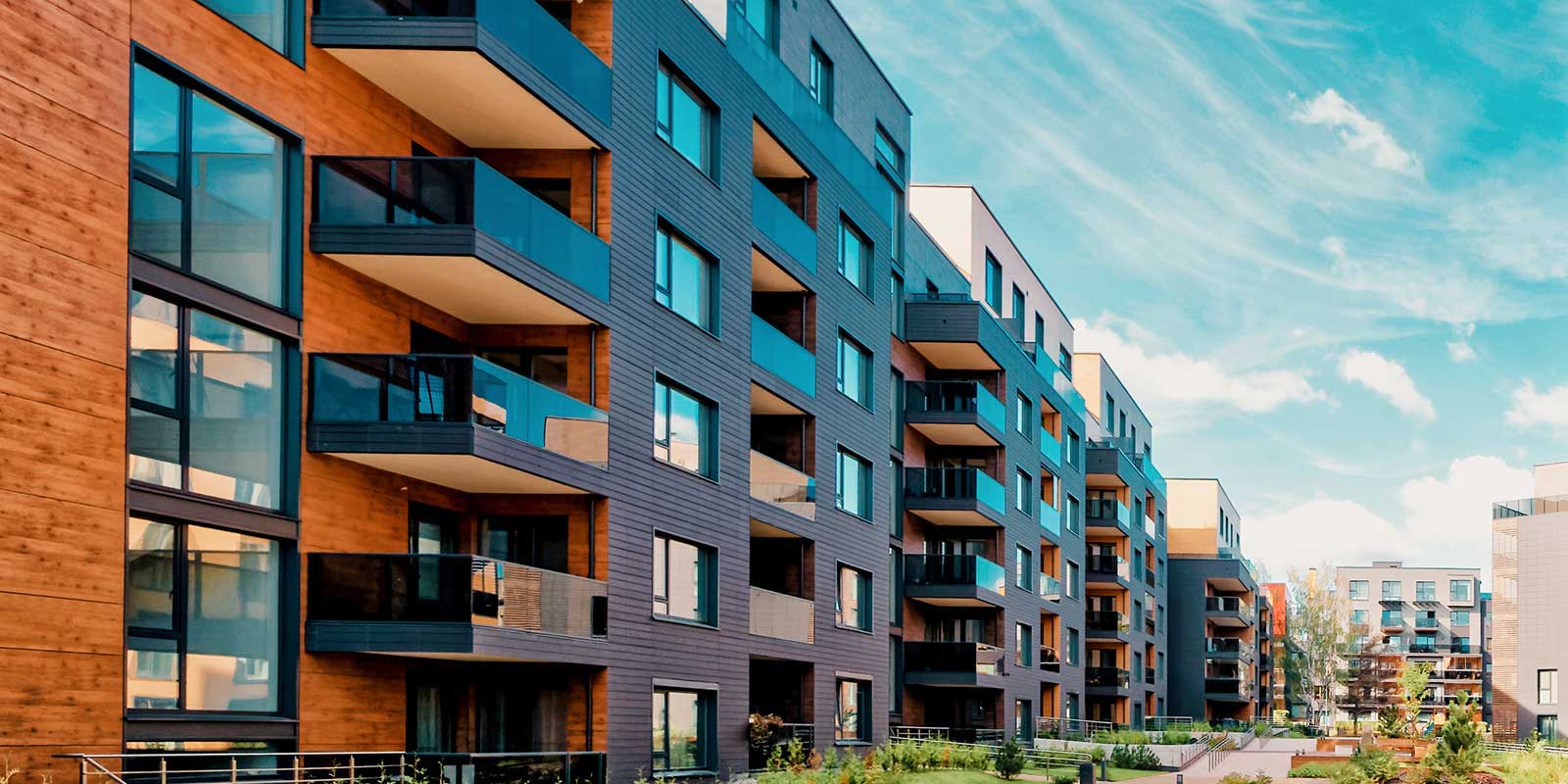
If you already know habitational insurance exists and you need it, the next question is the one that actually matters at claim time: what does your specific policy cover, and how much will it pay? This guide breaks down habitational coverage by the actual structure of the policy (Coverage A through F), explains the sub-limits and endorsements that change what your policy pays, and shows you exactly how to read your declarations page so you know what you have before something happens. For the high-level definition of habitational insurance and who needs it, see What Is Habitational Insurance? This guide picks up where that one ends.

Quick Answer: A habitational insurance policy is built from several distinct coverages, typically labeled Coverage A through F on commercial property forms. Coverage A protects the building, B covers other structures, C covers business personal property, D pays loss of rental income, E provides general liability coverage for tenant and visitor injury, and F handles medical payments. Each coverage has its own limit, sub-limits, exclusions, and conditions that trigger when it responds. Endorsements (replacement cost, ordinance and law, equipment breakdown, sewer backup, earthquake, flood) can dramatically expand what your policy pays. Understanding the difference between the main limit and the sub-limits is where most landlords get blindsided at claim time.

The Six Core Coverages of a Habitational Insurance Policy

Commercial habitational policies follow a standard coverage structure. The naming may vary by carrier (some use letters, some use plain language), but the underlying coverages are consistent. Here is the breakdown:

Coverage A: Building / Dwelling

What it covers: The physical structure of the building or buildings, including the foundation, walls, roof, fixed equipment (built-in appliances, HVAC, plumbing, electrical), and permanently attached structures. For a 24-unit apartment building, Coverage A pays to rebuild the building after a covered loss.

Typical limit: Set equal to the replacement cost of the building. For a typical 2-4 unit residential property in Illinois, $400,000 to $900,000. For a 24-unit apartment building, $2 million to $6 million. For a 100+ unit complex, $10 million to $40+ million.

Common trigger events: Fire, wind, hail, lightning, vandalism, falling objects, vehicle impact, water damage from burst pipes (excluding flood and earthquake unless endorsed).

Gotcha: Coverage A limits set before 2022 are likely 30 to 50 percent below current construction costs. Underinsurance at this level can trigger coinsurance penalties that reduce every claim payment proportionally.

Coverage B: Other Structures

What it covers: Detached structures on the property that are not part of the main building. Includes detached garages, storage sheds, fences, signs, mailbox structures, gazebos, pool houses, detached laundry facilities, gatehouses, and similar structures.

Typical limit: Usually written as a percentage of Coverage A (10 to 20 percent) or as a standalone limit. For most multi-family properties, $25,000 to $100,000 is common.

Gotcha: Owners with significant detached infrastructure (carports, large detached garages, multiple outbuildings) often run into limit shortfalls. Get this limit increased as a standalone if needed.

Coverage C: Business Personal Property

What it covers: The landlord's business personal property at the location: appliances supplied to tenants but owned by the landlord (refrigerators, ranges, dishwashers, washer/dryer), maintenance equipment, lawn equipment, snow removal equipment, leasing office furniture and computers, and supplies.

Typical limit: $25,000 to $250,000 depending on the property. Apartment buildings with furnished units, on-site maintenance shops, or in-unit washer/dryer setups need higher limits.

Important: Coverage C does NOT cover tenant personal property. Tenants need their own renters insurance for that. This is one of the most common misunderstandings in habitational coverage.

Coverage D: Loss of Rental Income (Business Income)

What it covers: The rental income lost when a covered property loss makes units uninhabitable during repairs. Pays the income shortfall plus continuing expenses (mortgage, property taxes, utilities, payroll for retained employees) while repairs are underway.

Typical limit: Usually written as a number of months (12 months standard, 18 or 24 months for larger or more complex buildings) multiplied by monthly gross rental income.

Trigger: Coverage D only responds when there is a covered Coverage A or B loss that makes units uninhabitable. It does NOT cover lost rent from problem tenants, evictions, normal vacancy, or units that are simply hard to rent. For more detail, see Business Income / Loss of Rental Income.

Gotcha: The 12-month default is often inadequate for larger buildings with longer expected rebuild timelines. A major fire in a 50-unit building can easily take 18 months to rebuild given current contractor and supply chain conditions.

Coverage E: General Liability

What it covers: Third-party bodily injury and property damage claims arising from the rental property. Pays settlements, judgments, and defense costs (defense is typically OUTSIDE the policy limit, meaning it does not erode the amount available for settlement).

Typical limits: $1 million per occurrence with $2 million aggregate is the standard minimum. Larger buildings or those with amenity exposure (pools, fitness centers, playgrounds) should carry $2 million per occurrence with $4 million aggregate, then layer a commercial umbrella on top.

What triggers it: Tenant slips on icy walkway, child injured on playground, delivery driver injured on property, visitor falls in common area, pool injury, dog bite by tenant pet. For more on this coverage type, see Commercial General Liability Insurance.

Coverage F: Medical Payments

What it covers: Medical expenses for third parties injured on the property, regardless of fault. Designed as a fast-pay coverage to settle small medical claims before they escalate to lawsuits.

Typical limit: $1,000 to $10,000 per person. Pays medical bills up to the limit without requiring liability to be established.

Why it matters: A minor injury can become a major lawsuit if not handled quickly. Medical payments coverage provides a fast settlement option that often prevents a small claim from escalating.

Property Coverage Forms: What "Covered Perils" Actually Means

Habitational property coverage is written on one of three forms, and the form determines what perils trigger the policy. From most restrictive to broadest:

Form What It Covers Best For
Basic Form Named perils only: fire, lightning, explosion, vandalism, riot, aircraft, vehicle damage, smoke, sinkhole Lowest cost, narrowest coverage. Rarely the right choice.
Broad Form Basic Form perils plus: glass breakage, falling objects, ice/snow/sleet weight, water damage from plumbing, collapse from specific causes Mid-tier coverage. Acceptable for some smaller properties.
Special Form All causes of loss except those specifically excluded (open peril). Excludes flood, earthquake, war, nuclear, intentional acts, wear and tear, etc. Broadest coverage. Recommended for almost all habitational properties.

If your declarations page does not say "Special Form" or "Causes of Loss - Special Form," you may be on Basic or Broad Form coverage, which leaves significant gaps. The premium difference between forms is usually small relative to the coverage difference.

Coverage Sub-Limits: The Gotchas Most Landlords Miss

Inside the main Coverage A, B, and C limits sit sub-limits that cap specific categories of property regardless of the overall limit. These are where landlords get surprised at claim time. Common sub-limits on commercial habitational policies:

  • Outdoor signs: Typically $2,500 to $5,000 sub-limit unless specifically scheduled for higher
  • Trees, shrubs, plants, and lawns: Typically $500 to $1,000 per item with $2,500 to $10,000 aggregate, only for named perils (fire, lightning, explosion, riot, aircraft, vehicle, vandalism)
  • Fences: May fall under "other structures" with their own sub-limit
  • Money and securities: Usually $10,000 sub-limit, often less for cash on premises
  • Computer equipment and electronic data: Often sub-limited unless specifically scheduled
  • Property in transit: Sub-limited to $1,000 to $5,000 typically
  • Property off-premises: Sub-limited to $10,000 to $25,000 typically
  • Valuable papers and records: Sub-limited to $2,500 to $25,000
  • Accounts receivable: May have separate sub-limit
  • Backup of sewers and drains: Often excluded entirely, or sub-limited to $5,000 to $25,000 with endorsement
  • Pollutant cleanup: Sub-limited to $10,000 to $25,000 unless specifically endorsed
  • Glass: Window and plate glass may be sub-limited

When reviewing your habitational policy, request the declarations page that lists all sub-limits. Buildings with significant outdoor signage, mature landscaping, on-site management offices with electronic equipment, or multiple buildings with shared utilities all need higher sub-limits in specific categories.

Endorsements That Change What Your Policy Covers

Endorsements are amendments to the base policy that add, restrict, or modify coverage. The most important endorsements to consider on a habitational policy:

Replacement Cost vs. Actual Cash Value

By default, some commercial property policies pay Actual Cash Value (ACV), which is replacement cost minus depreciation. For a 20-year-old roof, that depreciation can be 50 to 75 percent of the replacement cost. Replacement cost endorsement requires the carrier to pay the full cost to rebuild, without depreciation. For habitational policies, replacement cost should be considered standard, not optional.

Agreed Value

Eliminates coinsurance penalties at claim time. With agreed value, the carrier accepts the limit as the agreed value of the property and waives coinsurance. Particularly valuable for older buildings where appraisals may not match current replacement cost.

Inflation Guard

Automatically increases the Coverage A limit each year (typically 4 to 8 percent) to keep pace with construction cost inflation between renewals. Important coverage to add given the construction cost increases of recent years.

Ordinance or Law Coverage (A, B, and C)

Ordinance or Law has three components: Coverage A pays for the loss of value to the undamaged portion of a building when local code requires demolition. Coverage B pays the cost of demolition and debris removal. Coverage C pays the increased cost of construction to meet current code. For buildings built before 1990, all three are essentially required. Modern code requirements can add 20 to 40 percent to the cost of rebuilding an older property.

Equipment Breakdown

Covers mechanical, electrical, and pressure system failures (boilers, HVAC compressors, electrical panels, water heaters, elevators, well pumps). Standard property policies exclude mechanical breakdown. For buildings with significant mechanical systems, this is essentially mandatory.

Loss of Rents Extended Period

Extends Coverage D for an additional 30, 60, or 180 days after repairs are complete, recognizing that re-tenanting a building after a major loss takes time. For 50+ unit buildings, this extension can be the difference between a recovered claim and ongoing financial strain.

Backup of Sewer and Drains

Sewer and drain backup is often excluded from base property coverage. This endorsement adds coverage for damage from backed-up sewers, drains, and sump pump failures. Critical for buildings in older Illinois neighborhoods with aging municipal sewer infrastructure.

Earthquake

Earthquake is excluded by default. Illinois is in a moderate seismic risk zone due to the New Madrid Fault, particularly for properties in southern Illinois. Endorsement available, typically with a high deductible (often 5 to 15 percent of the building value).

Flood

Flood is excluded by default. Required separately through FEMA-backed flood insurance (NFIP) or private flood markets. Mandatory for properties in FEMA-designated flood zones. Properties near rivers, lakes, or low-lying areas should consider it even when not legally required.

Hired and Non-Owned Auto

Covers liability arising from vehicles you do not own but that are used in your business (employee personal vehicles used for property errands, rented trucks for maintenance work). Often overlooked but important for properties with on-site maintenance staff.

How to Read Your Habitational Declarations Page

Your declarations page is the summary of what you actually have. Here is exactly what to look for, line by line:

  1. Named Insured: Confirm the correct legal entity is named. LLC ownership requires the LLC named as insured, not the individual.
  2. Policy Period: Effective and expiration dates. Note any gaps if you recently switched carriers.
  3. Coverage A (Building): Compare the limit to current replacement cost. Outdated limits trigger coinsurance penalties.
  4. Coverage B (Other Structures): Confirm adequate for detached garages, sheds, fences, signs.
  5. Coverage C (Business Personal Property): Confirm adequate for appliances and equipment you own.
  6. Coverage D (Loss of Rental Income): Verify the months of coverage and that monthly limit matches actual gross rental income.
  7. Coverage E (General Liability): Per-occurrence and aggregate limits. $1M/$2M minimum.
  8. Coverage F (Medical Payments): Per-person limit.
  9. Causes of Loss Form: Should say "Special Form" for broadest coverage.
  10. Valuation: "Replacement Cost" or "Actual Cash Value." Should be RC for habitational.
  11. Coinsurance: Look for 80/100 or "Agreed Value." Agreed value is better.
  12. Deductibles: Note property deductible (often per location), wind/hail deductible (sometimes separate, often higher), and any percentage deductibles for catastrophic perils.
  13. Endorsements Schedule: List of all endorsements added. Verify ordinance and law, equipment breakdown, sewer backup are present.
  14. Sub-Limits: Schedule of sub-limits for outdoor signs, trees/shrubs, money, computers, etc.
  15. Premium: Total annual premium and how it breaks down by coverage.

If your declarations page does not show several of these items clearly, your broker should be able to provide a coverage summary that does. If they cannot, that is itself a signal.

What Habitational Insurance Does NOT Cover

Common exclusions that surprise landlords at claim time:

  • Tenant personal property. Habitational covers the landlord. Tenants need their own renters insurance.
  • Flood damage. Excluded unless separate flood policy is in place.
  • Earthquake damage. Excluded unless endorsement added.
  • Wear and tear, gradual deterioration, deferred maintenance. Policies cover sudden and accidental losses.
  • Faulty workmanship, design defects, or construction defects. The contractor's general liability or professional liability would respond.
  • Intentional acts by the insured. Damage you cause intentionally is not covered.
  • Mold, mildew, or fungus. Typically excluded or severely sub-limited.
  • Pollution and environmental contamination. Excluded by default; pollution liability endorsement available separately.
  • Acts of war and nuclear events. Standard property exclusions.
  • Cyber losses. Cyber liability is a separate cyber insurance policy.
  • Employment-related claims. Wrongful termination, discrimination, harassment are covered by EPLI, not habitational.
  • Auto liability. Vehicles need separate commercial auto coverage.
  • Workers compensation claims. Separate workers comp policy required.
  • Vacant property beyond 60 days. Standard vacancy clause restricts or eliminates coverage on unoccupied buildings.
  • Loss of rent during normal vacancy or tenant disputes. Coverage D only responds to physical loss to the building, not normal market vacancy.

Claim Scenarios: Which Coverage Pays What

The cleanest way to see how habitational coverage works in practice is to break down real claim scenarios by which coverage pays what:

Scenario 1: Kitchen Fire in 16-Unit Apartment Building (Elgin)

  • Coverage A (Building): Pays $215,000 to rebuild fire-damaged units
  • Coverage D (Loss of Rental Income): Pays $38,400 for 8 months of lost rent on 4 affected units
  • Ordinance and Law Coverage: Pays $24,000 for code-required electrical and sprinkler upgrades during rebuild
  • Coverage E (Liability): Defense costs covered if any tenant injury claim arises from the fire
  • What the landlord pays out of pocket: Property deductible (typically $2,500 to $10,000) and any losses above policy limits

Scenario 2: Slip and Fall on Icy Walkway (Crystal Lake)

  • Coverage F (Medical Payments): Pays up to $5,000 in initial medical bills regardless of fault
  • Coverage E (General Liability): Pays settlement and defense if claim escalates beyond medical payments. Typical settlement: $80,000 to $250,000
  • Defense costs: Paid in addition to the policy limit (outside the limit), not eroding the amount available for settlement
  • What the landlord pays out of pocket: Liability deductible if any (often $0 to $5,000), and time spent on the claim

Scenario 3: Boiler Failure in 24-Unit Building (Algonquin)

  • Equipment Breakdown Endorsement: Pays $32,000 for boiler replacement and emergency repairs
  • Coverage D (Loss of Rental Income): Does NOT respond because units remained habitable (heat was restored within 36 hours)
  • Coverage A (Building): Does NOT respond because there was no covered property loss to the building structure
  • Without equipment breakdown endorsement: Landlord pays $32,000 out of pocket

Scenario 4: Severe Hailstorm Damages Roof on 8-Unit Building (Huntley)

  • Coverage A (Building): Pays $48,000 for roof replacement at replacement cost
  • Wind/Hail Deductible: 1 to 2 percent of building value applies separately from base deductible. On a $750,000 building, this could be $7,500 to $15,000.
  • Coverage C (Business Personal Property): Pays for any damaged appliances or equipment owned by the landlord
  • Coverage D (Loss of Rental Income): Responds if any units became temporarily uninhabitable during repairs

Scenario 5: Sewer Backup Floods Basement Units (Geneva)

  • Sewer Backup Endorsement: Pays $18,000 for cleanup, replacement of damaged drywall and flooring, and dehumidification
  • Without endorsement: Most habitational policies exclude sewer backup entirely. Landlord pays out of pocket.
  • Coverage D (Loss of Rental Income): Responds if affected units become uninhabitable
  • Tenant personal property losses: Tenants must claim under their own renters insurance. This is one of the situations that highlights why requiring tenant renters insurance matters.

Frequently Asked Questions

What are the main coverages in a habitational insurance policy?

A standard habitational policy includes six core coverages: Coverage A (building/dwelling), Coverage B (other structures), Coverage C (business personal property), Coverage D (loss of rental income), Coverage E (general liability), and Coverage F (medical payments). Each has its own limit, sub-limits, and conditions that trigger when it responds. Endorsements can expand coverage further (equipment breakdown, ordinance and law, sewer backup, earthquake, flood).

Does habitational insurance cover tenant belongings?

No. Habitational insurance covers the landlord's property and exposure only. Tenant personal property is the tenant's responsibility and requires their own renters insurance. This is one of the most common misconceptions. Most landlords now require tenants to carry renters insurance with at least $100,000 in liability coverage as a lease condition.

What is the difference between Basic, Broad, and Special Form property coverage?

Basic Form covers a limited list of named perils (fire, lightning, explosion, vandalism, riot, aircraft, vehicle, smoke, sinkhole). Broad Form adds water damage from plumbing, falling objects, weight of ice/snow, and glass breakage. Special Form covers all causes of loss except those specifically excluded (the broadest coverage). For most habitational properties, Special Form is the right choice.

What is replacement cost vs. actual cash value (ACV)?

Replacement cost pays the full amount to rebuild or replace damaged property without deducting for depreciation. Actual cash value pays replacement cost minus depreciation. For a 20-year-old roof, ACV might pay 25 to 40 percent of replacement cost while RC pays the full amount. For habitational policies, replacement cost should be considered standard and is significantly worth the premium difference.

What is loss of rental income coverage and how is it calculated?

Loss of rental income (Coverage D) pays the rental income lost when a covered property loss makes units uninhabitable during repairs. The limit is usually expressed as a number of months (12 months standard, 18-24 for larger properties) multiplied by gross monthly rental income. It only responds to a covered Coverage A or B loss, not to normal vacancy, problem tenants, or evictions.

What is ordinance or law coverage and do I need it?

Ordinance or law coverage pays the additional cost of complying with current building codes during reconstruction after a covered loss. It has three components: Coverage A pays for the loss of value to undamaged portions when code requires demolition, Coverage B pays demolition costs, and Coverage C pays the increased cost of construction. For any building built before 1990, this coverage is essentially required.

Does habitational insurance cover flood damage?

No. Flood damage is excluded from habitational policies by default. Flood coverage requires a separate FEMA-backed flood policy (NFIP) or a private flood market policy. Required for properties in FEMA-designated flood zones. Earthquake is also excluded by default and requires a separate endorsement.

What is equipment breakdown coverage?

Equipment breakdown coverage pays for mechanical, electrical, and pressure system failures: boilers, HVAC compressors, electrical panels, water heaters, elevators, well pumps, security systems. Standard property policies exclude mechanical breakdown, so this endorsement is essential for buildings with significant mechanical systems. A single boiler failure can cost the owner $20,000 to $50,000 out of pocket without it.

What is the vacancy clause in a habitational policy?

Most habitational policies have a vacancy clause that reduces or eliminates coverage if the property is unoccupied for more than 60 consecutive days. The carrier may deny vandalism, glass breakage, water damage, and theft claims on vacant properties. Buildings expecting extended vacancy (between tenants during renovation, conversion projects, or holding period) need a specialized vacancy policy. Always notify your broker if a unit will be vacant longer than 60 days.

How do I review my habitational policy to find coverage gaps?

Start with your declarations page and check: Coverage A limit vs. current replacement cost, Coverage D months and monthly limit vs. actual gross rental income, causes of loss form (should be Special), valuation basis (should be Replacement Cost), endorsements schedule (should include ordinance and law, equipment breakdown, sewer backup), sub-limits, and deductibles. An independent broker who specializes in habitational coverage will do this review at no cost and identify gaps before something happens. Request a quote at proinsgrp.com or call 833-776-4671.

Related Reading

Get a Habitational Insurance Coverage Review

If you want to know exactly what your current habitational policy covers, where the gaps are, and what your specific declarations page is telling you (or not telling you), we offer free portfolio reviews. We will walk through Coverage A through F, sub-limits, endorsements, and exclusions and identify any gaps before something happens.

Request a Quote Online

Or call 833-776-4671

About the author: Neal Fusco is Vice President of Commercial Lines at Pro Insurance Group with 25+ years of experience specializing in habitational and landlord insurance, community associations, trucking, towing, and workers compensation. Pro Insurance Group is an independent brokerage headquartered in Elgin, IL with a second office in Huntley, serving Illinois landlords and real estate investors and operating in 40+ additional states.

What Is Habitational Insurance?

1 min read

What Is Habitational Insurance?

Habitational insurance is the commercial property and liability program for residential rental real estate. If you own apartment buildings, condo...


Read More
Is Landlord Insurance Worth Having?

1 min read

Is Landlord Insurance Worth Having?

Landlord insurance is a great way to reduce financial risk if you rent one or more of your properties to tenants. This is often necessary as a...

Read More
What Is Covered With Landlord Insurance Vs. Renters Insurance?

1 min read

What Is Covered With Landlord Insurance Vs. Renters Insurance?

If you own and/or manage one or multiple rental properties, you may have considered purchasing landlord insurance or renters insurance. However, you...

Read More