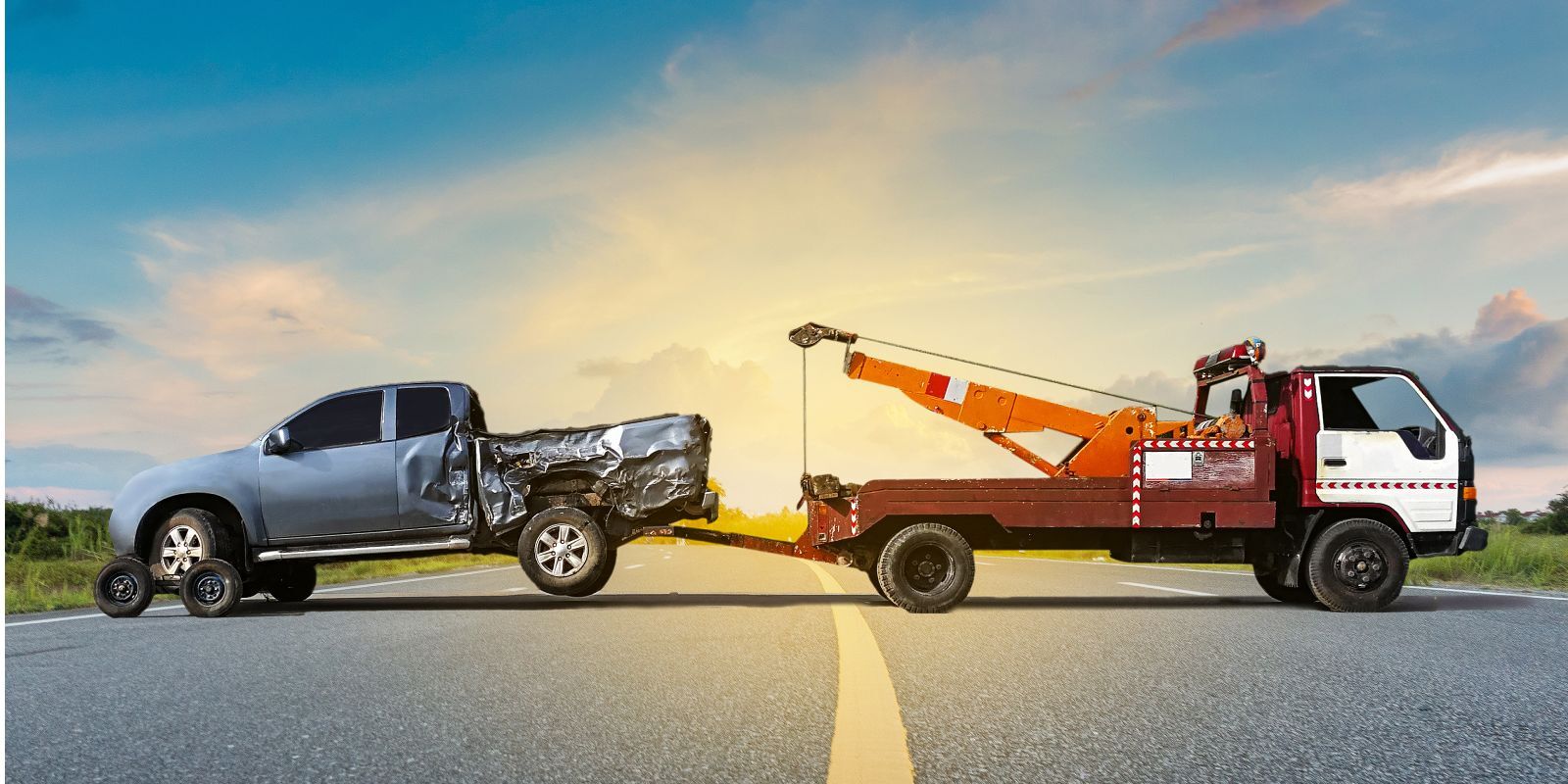
Towing insurance is the specialty commercial insurance program that protects tow truck operators against the unique combination of risks their business creates: liability on the road, damage to customer vehicles in their custody, physical damage to expensive tow equipment, and operational exposures that standard commercial auto policies do not address. It is not a single policy. It is a coordinated stack of coverages that together address what tow truck operators actually do for a living.

Every tow truck operator we work with at Pro Insurance Group runs a different mix of services: light-duty roadside assistance, accident recovery, motor club work, heavy-duty commercial towing, police non-consensual tows, repossession, equipment hauling. Each service profile creates a different exposure mix, and each mix requires the right combination of coverages to actually respond when something goes wrong. This guide explains what towing insurance is, the core coverages every towing program needs, the critical coverage gap that catches most operators by surprise, and what to expect when shopping a towing program.

What Is Towing Insurance?

Towing insurance is a packaged commercial insurance program written for businesses that tow, transport, recover, or store vehicles as part of their primary operations. It is a specialty class within commercial auto and commercial trucking insurance, written by a specific set of carriers (Progressive Commercial, Sentinel, Hudson, Lancer, NIP, AmTrust, and a handful of others) that have the appetite and the underwriting expertise to handle the loss patterns towing operations produce.

A typical towing program includes commercial auto liability, on-hook towing coverage for customer vehicles being transported, garagekeepers liability for customer vehicles in your custody at your lot or yard, physical damage coverage on your tow trucks, general liability for your premises and operations, workers compensation for your drivers, and a commercial umbrella above all of it. Each piece responds to a specific exposure category, and missing any one of them creates a coverage gap that becomes obvious at claim time.

The businesses that need a true towing insurance program include tow truck operators of every size, roadside assistance providers, auto recovery and repossession companies, auto salvage and auction haulers, motor club contractors, mobile mechanics who tow as part of their service, and auto body shops or repair facilities that operate their own tow trucks for customer pickup and delivery.

The Core Coverages Every Towing Program Needs

Commercial Auto Liability

Commercial auto liability covers bodily injury and property damage your driver causes in the course of operating the tow truck on the road. This is the foundation of every towing program and is required by law in every state. Tow operators in interstate commerce with vehicles over 10,001 pounds GVWR are subject to FMCSA minimum financial responsibility requirements (currently $750,000 for non-hazardous freight), but practical minimums are typically $1 million combined single limit, with $2 million or higher common for heavy-duty operations and contract requirements.

On-Hook Towing Coverage

On-hook coverage pays for damage to the customer vehicle while it is in tow, attached to the tow truck and in transit. Without on-hook coverage, a customer vehicle damaged during transport (fire, collision, theft, vandalism while attached to the tow truck) comes directly out of the towing company's pocket. On-hook limits typically range from $50,000 to $250,000, with higher limits available for heavy-duty operations transporting high-value equipment. Most policies exclude certain situations: towing antique cars or race cars, towing the operator's own vehicles, towing vehicles behind motorhomes, and similar non-commercial scenarios.

Garagekeepers Liability

Garagekeepers is the single most overlooked coverage in towing insurance, and the one that most often catches new tow operators by surprise. Standard commercial auto liability does not cover damage to customer vehicles stored at your lot or yard. Once the customer vehicle is off the hook and parked on your premises, the auto policy stops responding. Garagekeepers fills that gap.

A tow operator who suffers a fire, flood, theft, vandalism, or hail event affecting customer vehicles in storage faces a multi-vehicle property damage claim that auto liability and on-hook coverage do not address. Garagekeepers can be written on a legal liability basis (you pay only if you are legally responsible) or direct primary basis (you pay regardless of fault), with limits scaled to the number of vehicles typically on the lot. For any tow operator with even a small storage component, garagekeepers is not optional.

Physical Damage Coverage on the Tow Truck

Physical damage coverage pays for damage to your own tow trucks and equipment, including collision, comprehensive (fire, theft, vandalism, weather), and specified perils. Tow trucks are expensive: a new wheel-lift starts around $80,000, a flatbed runs $90,000 to $150,000, and heavy-duty wreckers can exceed $400,000. Most lenders financing tow equipment require physical damage coverage as a condition of the loan. Comprehensive deductibles are typically $1,000 to $5,000 depending on the operation size and risk profile.

Truckers General Liability (TGL) or Commercial General Liability

General liability covers bodily injury and property damage that occurs at your premises (slip and fall at the lot, customer injured while signing paperwork) and operations-related exposures not arising directly from the use of the tow truck. For most towing operations, a Truckers General Liability form is the appropriate product because it specifically addresses the operations of commercial transportation businesses. Limits typically start at $1 million per occurrence.

Workers Compensation

Workers compensation pays for medical care and lost wages when your drivers are injured on the job, which happens more often in towing than in most commercial classes due to the inherent danger of roadside work in active traffic. Tow operators in most states are required to carry workers compensation if they have employees. Employer's liability under Part B of the workers compensation policy is also where the umbrella will attach for third-party-over claims.

Commercial Umbrella or Excess Liability

A commercial umbrella sits above the underlying commercial auto, general liability, and employer's liability policies and provides additional limits when a serious claim exceeds the underlying limits. Given the catastrophic exposure of commercial vehicle operations (verdicts in the $5M to $50M range are not uncommon for serious tow truck accidents involving fatalities), most towing operations need $1 million to $5 million in umbrella coverage at minimum, with heavy-duty and high-volume operations frequently carrying $10 million or more. See our guide to commercial umbrella insurance for detailed treatment.

Additional Coverages Worth Considering

Beyond the core program, several additional coverages address specific exposures common in towing operations:

  • Cargo coverage: for tow operators who haul vehicles that are not directly on the hook (vehicles inside enclosed transporters, secured equipment, multi-car carriers)
  • Medical payments coverage: for injuries to drivers and passengers in the tow truck, including customers who ride along after their vehicle is recovered
  • Uninsured and underinsured motorist coverage: protecting your drivers when an at-fault third party has insufficient coverage
  • Pollution liability: for fuel spills, hazmat from damaged vehicles, and similar environmental exposures common in accident recovery work
  • Wrongful repossession liability: if any portion of the business does repossession work, this is an essential coverage that standard policies exclude
  • Dispatching and brokering coverage: if you dispatch to other tow operators or function as a motor club contractor, distinct coverage may be needed
  • Equipment breakdown coverage: for the hydraulic systems, winches, and specialized equipment that fail in ways excluded by standard physical damage

What Towing Insurance Costs

Towing insurance premiums vary widely by operation type, fleet size, radius of operation, claims history, and driver experience. Typical annual premium ranges per tow truck:

  • Light-duty roadside assistance (one truck, local radius): $4,000 to $8,000 per year
  • Light to medium-duty consensual towing (one to three trucks): $6,000 to $12,000 per truck per year
  • Heavy-duty commercial towing: $10,000 to $20,000+ per truck per year
  • Police impound and non-consensual towing: $12,000 to $25,000+ per truck per year due to elevated liability profile
  • Repossession operations: $15,000 to $30,000+ per truck per year, varies significantly by carrier appetite

The largest variables affecting pricing are radius of operations (local vs regional vs over-the-road), claim history over the past 3 to 5 years, driver MVRs and driver experience, the specific carrier markets the broker has access to, and the limits selected on commercial auto and umbrella.

Why Towing Insurance Is a Specialty Class

Most regular commercial insurance brokers cannot effectively place towing insurance, because the carriers that write towing well are largely specialty markets that require dedicated broker relationships, specific submission formats, and experience with the underwriting questions tow operators get asked. A general commercial broker may quote one or two markets and accept whatever comes back; a specialty trucking and towing broker quotes the right markets for your specific operation and structures the program to actually respond at claim time.

At Pro Insurance Group, we work with the major towing carrier markets and have experience writing every class of towing operation from one-truck roadside services to multi-truck heavy-duty recovery operations. Our towing insurance program is structured for the operations tow companies actually run, not for whatever quote the broker happened to get.

Frequently Asked Questions

What does towing insurance cover?
A complete towing insurance program covers commercial auto liability (your driver causes injury or damage on the road), on-hook coverage (damage to the customer vehicle while in tow), garagekeepers liability (damage to customer vehicles in your lot or yard), physical damage on your tow trucks, general liability for premises and operations, workers compensation for your drivers, and a commercial umbrella for excess liability above the underlying limits. Optional additions include cargo, medical payments, pollution, repossession liability, and equipment breakdown.
What is the difference between on-hook coverage and garagekeepers liability?
On-hook coverage pays for damage to the customer vehicle while it is attached to the tow truck and in transit. Garagekeepers liability pays for damage to the customer vehicle once it is off the hook and parked at your lot or yard. These are two separate coverages that respond to two separate exposures, and tow operators need both. Many tow operators discover this distinction only after a claim is denied because the customer vehicle was on the lot, not on the hook, at the time of the loss.
How much does towing insurance cost?
Towing insurance typically costs $4,000 to $25,000+ per truck per year, depending on the operation type, fleet size, radius, claims history, and driver experience. Light-duty roadside assistance averages $4,000 to $8,000 per truck. Light to medium-duty consensual towing averages $6,000 to $12,000 per truck. Heavy-duty towing runs $10,000 to $20,000+ per truck. Police impound and repossession work command higher premiums due to elevated liability profiles.
Is garagekeepers insurance required for towing operations?
Garagekeepers is not generally required by law, but it is essentially required by operational reality for any tow operator with a storage component. Standard commercial auto liability does not cover damage to customer vehicles parked at your lot. Without garagekeepers, a single fire, hail event, theft incident, or storm can produce a multi-vehicle property damage claim that comes directly out of the operator's pocket. For practical purposes, garagekeepers is mandatory for any tow operation that stores customer vehicles.
What are the federal insurance requirements for tow truck operators?
Tow trucks operating in interstate commerce with a gross vehicle weight rating (GVWR) of 10,001 pounds or more are subject to Federal Motor Carrier Safety Administration (FMCSA) minimum financial responsibility requirements. For non-hazardous freight, the federal minimum is $750,000 per occurrence, though practical minimums are typically $1 million combined single limit. Most contracts and state DOT registrations require higher limits. Light-duty roadside service vehicles below 10,001 pounds GVWR are generally subject only to state minimums.
Do I need a specialty broker for towing insurance?
Strongly recommended. The carriers that write towing well are largely specialty markets that require dedicated broker relationships and specific underwriting experience. A general commercial broker without towing experience may quote one or two markets and miss the specialty programs entirely. A specialty trucking and towing broker quotes the right markets for your operation, structures the program correctly across all the required coverages, and has the carrier relationships to advocate at claim time. For an industry with high claim frequency and elevated severity exposure, broker expertise meaningfully affects both pricing and outcomes.
Does towing insurance cover repossession work?
Standard towing policies typically exclude repossession operations or treat them as a higher-risk class requiring specific endorsements. Repossession involves elevated exposure to wrongful repossession claims, customer confrontations, and breach of peace allegations that standard tow operations do not face. Tow operators that do any repossession work need either a specific repossession endorsement on their towing policy or a separate repossession contractors policy from a carrier that specifically writes that class.
How much umbrella coverage does a towing company need?
Most towing operations need at minimum $1 million to $5 million in commercial umbrella coverage above the underlying auto, general liability, and employer's liability policies. Heavy-duty operations, multi-truck fleets, and any operation with significant motor club or contracted work frequently carry $10 million or more. Commercial vehicle accident verdicts routinely exceed $1 million when serious injury or fatality is involved, and the underlying limits alone are rarely sufficient.

Build a Towing Insurance Program That Actually Responds

Pro Insurance Group writes towing and recovery insurance for operators across Illinois and nationally, with deep experience in light-duty roadside service, consensual towing, heavy-duty commercial recovery, police impound and non-consensual towing, motor club contracted operations, and multi-truck fleet programs. Our specialty trucking and towing team works with the carrier markets that actually write towing well, structures the program across all the required coverages, and advocates at claim time when it matters.

Call our specialty team at 833-776-4671, learn more about our national towing insurance program and our Illinois-specific towing coverage, see our deep dive on what towing insurance covers, or request a towing insurance quote for your operation today.

About the author: Neal Fusco is Vice President of Commercial Lines at Pro Insurance Group. With more than 25 years of insurance experience, Neal specializes in trucking and towing, habitational, senior care, and workers compensation placements for owners and operators across the Midwest and nationally. Connect with Neal on LinkedIn or reach him directly at nfusco@proinsgrp.com or 847-450-0389.

What Does Towing Insurance Cover?

6 min read

What Does Towing Insurance Cover?

Quick answer: Tow truck insurance covers seven core risks: auto liability (third-party injury and property damage), on-hook (damage to customer...

Read More
Tow Truck Insurance in Illinois: Coverage, Cost, and Who to Call

1 min read

Tow Truck Insurance in Illinois: Coverage, Cost, and Who to Call

If you run a towing operation in Illinois — whether you are a solo owner-operator, a small fleet, or an established towing company — you already know...

Read More